It is the last day of 2025.
My colleague, Anna Artymiak, a Polish journalist who has covered the Vatican for many years, writes:
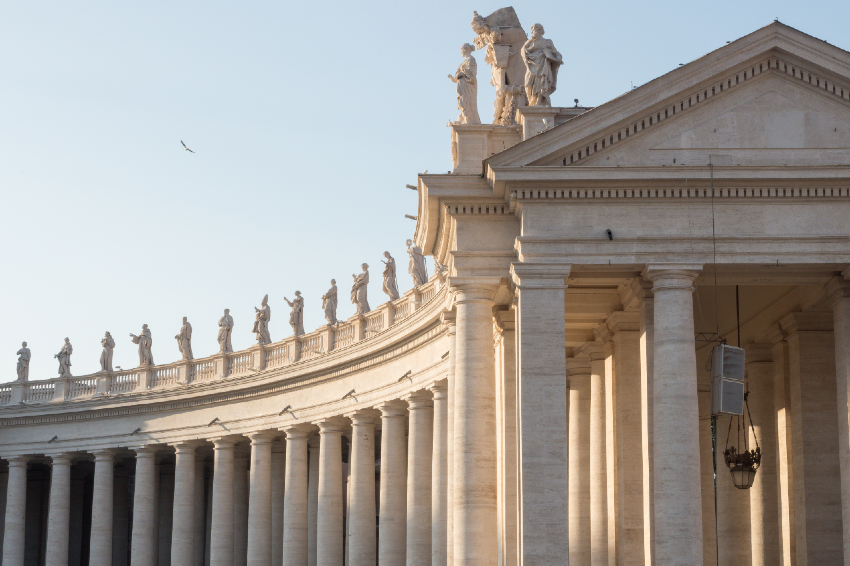
“It has been a cold and sunny day in Rome. Since Monday, the Eternal City is blocked by the last-hour pilgrims, coming to the Holy Door of St. Peter’s before the Holy Year of 2025 closes. On Sunday, the penultimate holy door, at the basilica of St. Paul’s Outside-the-Walls, was closed. Now only at St. Peter’s Basilica can pilgrims still pass through the last open Holy Door. Here, the holy door will be closed on January 6, Feast of Epiphany, and the Holy Year will come to an end.”
So, 2025 is ending.
It was a year of tragic war in Ukraine, and of tragic war in Gaza. May there be peace in both places. May there be peace, and healing. This is my prayer for the new year.
It was a year which saw the final illness, death and funeral of Pope Francis. He was 88 when he died. I knew him, and I experienced his kindness to my sons, Christopher and Luke, when the three of us were invited to visit the Domus Santa Marta for three days in the summer of 2013. The boys had just arrived in Rome, the city of their birth, after traveling for many weeks from China and Mongolia and then on the Trans-Siberian railway, east to west. I met them at Termini, with gratitude for their safe arrival, and we entered Vatican City to stay in the Domus, to end their journey home. We were granted the privilege to speak with Pope Francis, who had just returned from Rio de Janeiro, and he sat in one of the pews of the Domus chapel, alongside we three Americans, praying before the Blessed Sacrament, for 20 minutes, in silence. just the four of us. No guards, no one else. But after, when he questioned the boys — age 24 and 20 — about their journey, and they told him they had brought a guitar, and on the train, Russian soldiers had climbed on board, and asked to play the guitar, and had played, and sung songs, as the endless miles flowed past outside the train windows, he said, “Thank you for telling me. You know, music can begin to build bridges between people.”
***
Now I remember what the words on the arch in the chapel, in the Domus, behind the altar, said.
They were in Latin, the words of the prayer for the coming of the Holy Spirit.
Marvelous words and, I would say, apocalyptic — as if there is an age ahead of us, a new creation, different from this one, though also succeeding to this one::
VENI, Sancte Spiritus, reple tuorum corda fidelium, et tui amoris in eis ignem accende.
COME, Holy Spirit, fill the hearts of Thy faithful and kindle in them the fire of Thy love.
V. Emitte Spiritum tuum et creabuntur;
V. Send forth Thy Spirit and they shall be created
R. Et renovabis faciem terrae.
R. And Thou shalt renew the face of the earth.
Oremus:
DEUS, qui corda fidelium Sancti Spiritus illustratione docuisti: da nobis in eodem Spiritu recta sapere, et de eius semper consolatione gaudere. Per Christum Dominum nostrum. Amen.
Let us pray:
O GOD, Who taught the hearts of the faithful by the light of the Holy Spirit, grant that, by the gift of the same Spirit, we may be always truly wise, and ever rejoice in His consolation. Through Christ our Lord. Amen.
The words behind the altar are only the first words:
VENI, Sancte Spiritus, reple tuorum corda fidelium
COME, Holy Spirit, fill the hearts of Thy faithful
This is the true, authentic intelligence, which is wise and saving — the alternative to AI.
***
Somehow, now, looking back over 12 and a half years, of Francis’ pontificate, looking back on a pontificate which was focused on the poor and marginalized — but are not many of the rich, and highly regarded by society, spiritually poor and, yes, marginalized? — I am left with the same sense of inarticulate sadness and confusion that troubled me from the moment on February 11, 2013, when I heard that Pope Benedict XVI had just resigned (resigned!?!).
Bereft.
So, yes, I saw Francis often from 2013 to 2018. I visited the Domus three or four times a year, for several days each time. And I would meet him, on the elevator, or at the buffet table where he fixed his salad — he still walked under his own power in those years. I was a guest in his home,
And many times I felt that “perplexity” which Vatican officials often refer to when confronting phenomena which cannot be analyzed and explained in one or two neat phrases.
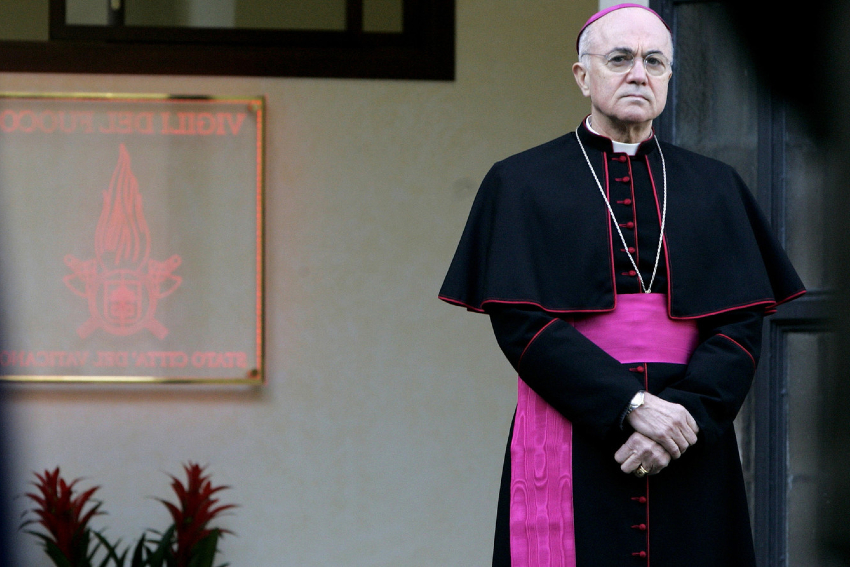
When I began to discuss my perplexity with others, and finally — and at great length — especially with my friend, Italian Archbishop Carlo Maria Viganò (who will turn 85 in 2 weeks, on January 16) — it seemed to me that the need for the prayer invoking the Holy Spirit was ever greater, ever more central, filling my mind, and my heart.
I had no wisdom of my own, or insufficient wisdom, to understand the mysteries of the Vatican… the mystery of the resignation of Benedict… the mystery of the evident embrace by many in our Holy Mother Church of worldly categories and perspectives and initiatives, which were the initiatives and perspectives and categories of an elite which uses myriad words, eloquently, but never, ever, refers to the Holy Spirit at all.
In those years, I would often enter that chapel and pray that prayer:
COME, Holy Spirit, fill the hearts of Thy faithful and kindle in them the fire of Thy love.
VENI, Sancte Spiritus, reple tuorum corda fidelium, et tui amoris in eis ignem accende.
V. Send forth Thy Spirit and they shall be created
V. Emitte Spiritum tuum et creabuntur;
R. And Thou shalt renew the face of the earth.
R. Et renovabis faciem terrae.
And in my own inner being, I realized, over time, that I myself had flown too high, that I had imitated Icarus, flying too near to the sun, so that the wax in my wings, fashioned for me by my father, my Daedalus, was melting, and I would inevitably plunge into the sea.
***
It could not be that from my journalistic questioning, or my writing, or my traveling, or my acting, that the life of the Church could be protected and preserved… that the rituals, sacraments, traditions and mercies toward the weak and poor, and forgiveness for sinners, might be preserved and deepened
For I, to my sorrow, was numbered among the fallen, unable to escape my own “I,” my ego, unable to set my gaze unwaveringly on…. that which is above. The face of God.
***
And so the “Come, Holy Spirit” prayer became my invocation, for weeks and months and years.
***
Then came the revelations of Archbishop Viganò in 2018 — and I talked to him about many of the things he said before he wrote and published them — and then came the Covid year, 2020, the death of my father, William, the lonely March walk of Pope Francis in St. Peter’s Square in the drizzle, the police on every corner, the lock-down of the churches, and then the vaccine year, 2021, the shaming, and firing from needed jobs, of those who were vaccine “hesitant” — though, as it seemed to me, scientists had reported, with seeming honesty, and brave Catholics like Bishop Athanasius Schneider had warned, that the pharmaceutical companies had employed human fetal stem cells from aborted human babies, at least in an early part of the process, leading to the development of many vaccinations, so that the hesitancy in this regard was morally mandatory for Catholics.
There would be more to say, as many of you know well, but that for now, on New Year’s Eve, suffices…
***
On July 4, 2024, Archbishop Viganò was excommunicated. Monsignor John Kennedy signed the decree, that was voted on by a committee of cardinals, who had hesitated for two years to vote in this way, not wishing to “create a martyr.”
Thus, the Italian archbishop who had been a tireless worker for the Church and the Holy See for a lifetime, for 50 years, was sent out of the Church.
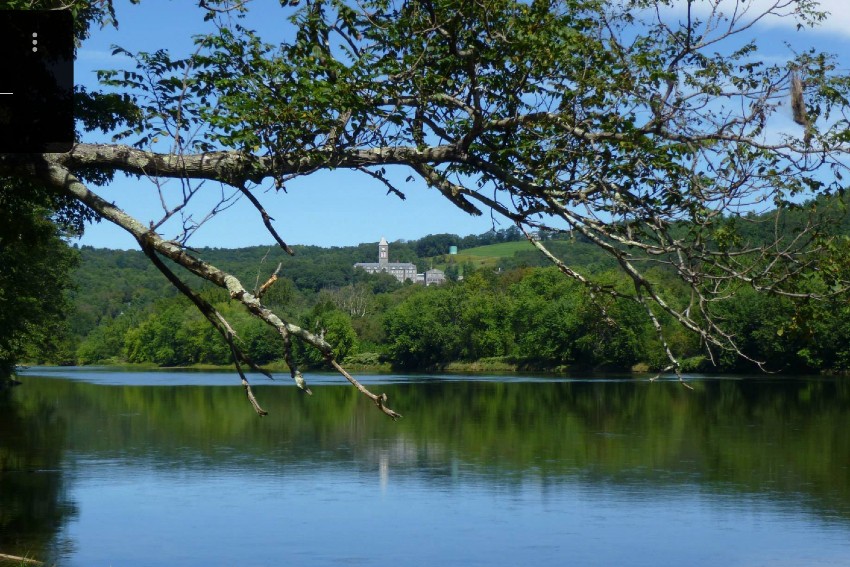
He found friends and supporters and refuge in a small monastery outside of Viterbo, 50 miles north of Rome, an hour and a half drive by car.
***
Eight months later, Francis died.
In 2013, Francis had asked me to pray for him, and I said I would.
I tried and still try to keep the promise, and pray for his soul. Who among us may say what decisions we might take, or be compelled to take, were we in that chair?
I pray for Papa Francesco, for the repose of his immortal soul.
***
The year 2025 saw the convening of a conclave to elect a new Pope and the election on May 8 of the first American Pope, Robert Prevost from Chicago (and also from Peru, where he was a missionary for many years), who took the name Leo XIV.
During the first 7 1/2 months of his papacy, Leo has spoken calmly, clearly, and ceaselessly, of the need for peace in the world, unity in the Church, and a renewal of the interior life of souls.
***
He has emphasized his own spirituality of “the practice of the presence of God.”
In a recent in-flight interview, Pope Leo mentioned that Brother Lawrence’s The Practice of the Presence of God –– written in Paris in about 1690 — was one of the great influences on his spiritual life.
Lawrence was a lay brother in a Carmelite monastery in seventeenth-century Paris, whose sayings and letters were collected and published by a local priest, Fr. Joseph de Beaufort, who knew Lawrence.
“It’s a very simple book by someone who doesn’t even give his last name,” Pope Leo said in early December on the airplane. “I read it many years ago, but it describes a type of prayer and spirituality where one simply gives his life to the Lord and allows the Lord to lead…
“And if you want to know something about me, that’s been my spirituality for many years, in midst of great challenges—living in Peru, during years of terrorism, being called to service in places where I never thought I would be called to serve to—I trust in God, and that message is something that I share with all people.”
***
Now, 2026 is about to begin.
So… I send to you a Vatican News report on Pope Leo’s reflections from today.
With this, we may conclude the very special “Year of Hope” of 2025.
My wishes for 2026:
1) Peace in Ukraine
2) Peace in Gaza
3) By some extraordinary grace of God, the lifting of the excommunication of Archbishop Viganò, before his mortal life ends, as one part of a more general effort to heal and rebuild the Church of our time, so that She, our Church, the bride of Christ, may be resplendent in dignity, in honor, and in charity, and so able to assist the Holy Spirit in the very work of the Spirit — the renewal of the face of the earth
A blessed, holy, happy New Year to all, especially to all your children and grandchildren, with the hope of peace in every family, and every heart.
The Prayer Invoking the Coming of the Holy Spirit
COME, Holy Spirit, fill the hearts of Thy faithful, and kindle in them the fire of Thy love.
VENI, Sancte Spiritus, reple tuorum corda fidelium, et tui amoris in eis ignem accende.
V. Send forth Thy Spirit and they shall be created
V. Emitte Spiritum tuum et creabuntur;
R. And Thou shalt renew the face of the earth.
R. Et renovabis faciem terrae.
—RM
Note: If you would like to subscribe to this letter, or add a friend as a subscriber, you may do so here.
Last note: I have written this letter for some 20 years. It is a free letter, I am a writer, and I am now getting older. I will try to continue to write in the coming months and years. If you would like to make a 2025 year-end donation to the work of this letter, and of the magazine Inside the Vatican, founded in 1993, you may do so here. It would be helpful and much appreciated. Thank you. Happy New Year.
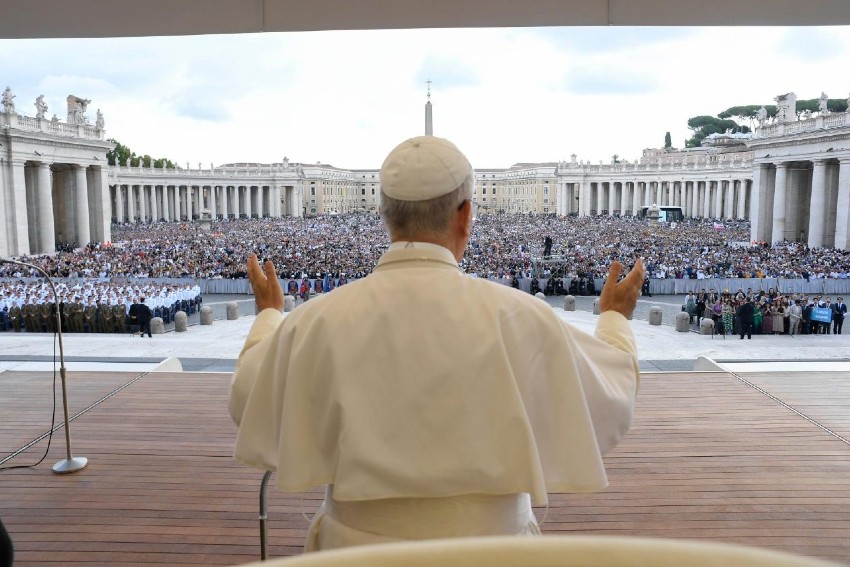
Pope at Audience: As we cross from old year to new, let us entrust everything to God (link)
At his final General Audience of 2025, Pope Leo XIV invites the faithful to give thanks for the past, seek forgiveness, and entrust the journey ahead to God’s mercy.
By Vatican News
December 31, 2025
During his final General Audience of the year on Wednesday, Pope Leo XIV recalled that the months just lived had been marked by events of contrasting significance.
“Some of them joyful,” he said, “such as the pilgrimage of so many of the faithful on the occasion of the Holy Year; others painful, such as the passing of the late Pope Francis, and the scenarios of war that continue to convulse the planet.”
Precisely for this reason, he added, the Church calls believers to gather everything—joys and sufferings alike—before God, asking Him “to renew, in us and around us, in the coming days, the wonders of his grace and mercy.”
Te Deum prayer
With this in mind, Pope Leo reflected on the ancient tradition of the solemn Te Deum sung on the evening of 31 December.
“It is in this dynamic,” he explained, “that the tradition of the solemn singing of the Te Deum, with which we will thank the Lord this evening for the blessings we have received, finds its place.”
Quoting Pope Francis, he contrasted this prayerful gratitude with what he called a worldly attitude. “While ‘worldly gratitude and worldly hope are evident… they are focused on the self, on its interests’,” Pope Francis had said. “In this Liturgy… one breathes an entirely different atmosphere: one of praise, of wonder, of gratitude.”
This spirit of thanksgiving, Pope Leo continued, also calls for truthfulness of heart. “With these attitudes,” he said, “we are called upon to reflect on what the Lord has done for us over the past year,” and also “to examine our consciences honestly,” asking forgiveness “for all the times we have failed to treasure his inspirations and invest the talents he has entrusted to us in the best possible way.”
A journey with a destination
The Pope then pointed to a second sign that has marked the Jubilee year: that of the journey. “This year,” he observed, “countless pilgrims have come from all over the world to pray at the Tomb of Peter and to confirm their adherence to Christ.”
Their pilgrimage, he explained, mirrors the deeper truth of human existence. “Our whole life is a journey whose final destination transcends space and time,” a journey fulfilled “in the encounter with God and in full and eternal communion with Him.”
This hope finds voice, he added, when the Church prays in the Te Deum: “Bring us with your saints to glory everlasting.”
The Holy Door
A third sign, the Pope continued, emerges in the light of eternity: the passage through the Holy Door. “So many of us,” he said, “have made this gesture, praying and imploring forgiveness for ourselves and our loved ones.”
Crossing the threshold, he explained, expresses “our ‘yes’ to God,” who invites us, through forgiveness, “to cross the threshold of a new life, animated by grace, modelled on the Gospel.”
Quoting Pope Paul VI, Pope Leo stressed that this life is “inflamed by ‘love for that neighbour, in whose definition… every man is included’,” even those “personally unknown to us, even if bothersome and hostile,” yet always “endowed with the incomparable dignity of a brother.”
“This,” the Pope said, “is our ‘yes’ to a life lived with commitment in the present and oriented towards eternity.”
“Let the sinner rejoice”
Reflecting on these signs in the light of Christmas, Pope Leo recalled the words of Saint Leo the Great, who saw the Nativity as a proclamation of universal joy. “Let the saint rejoice, because he is approaching his reward; let the sinner rejoice, because he is offered forgiveness; let the pagan take courage, because he is called to life.”
“This invitation,” the Pope said, “is addressed today to all of us.” To the baptized, “because God has become our companion on the journey towards true life”; to sinners, “because, forgiven, with his grace we can stand up and set off again;” and to the poor and fragile, because the Lord, “making our weakness his own, has redeemed it.”
God is Love
In conclusion, Pope Leo recalled the Jubilee of 1975, noting how Pope Paul VI summed up its message in a single word: “love.”
“God is Love!” Pope Paul VI said during that audience. “God loves me! God awaited me, and I have found him! God is mercy! God is forgiveness! God is salvation! God, yes, God is life!”
“May these thoughts,” Pope Leo XIV concluded, “accompany us in the passage from the old to the new year, and then always, in our lives.”
[End, report on Pope Leo’s remarks today in Rone, in his last public audience of the year]