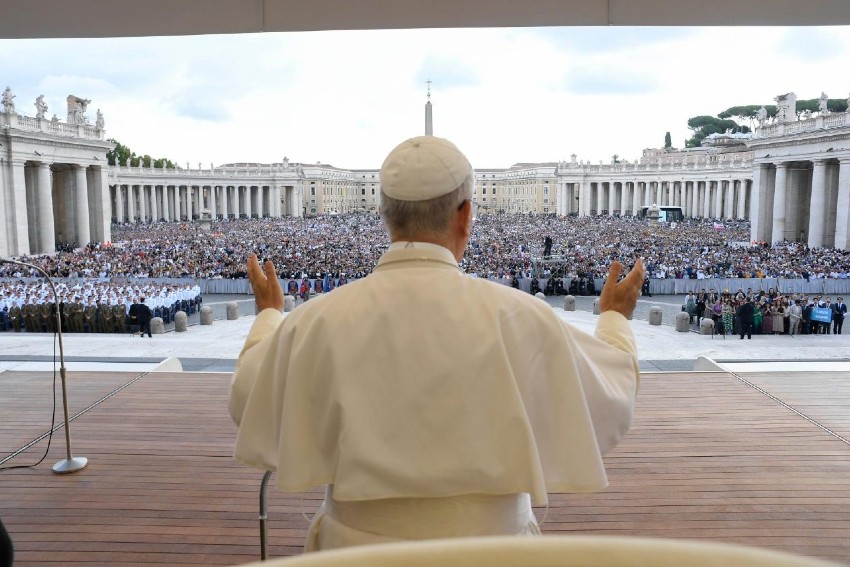

Letter #12, 2026, Wednesday, February 25: Cardinal Ruini
[Note: Please consider joining me tomorrow morning, Thursday, February 26, at 10 am US Eastern time (4 pm Rome time) in a live podcast with Bishop Athanasius Schneider, on our YouTube channel at this link.]
Bits and pieces of the interview I publish here below have been circulating on the internet since the interview appeared 6 days ago in Italy, in the Milan daily Corriere della Sera.
In the interview, carried out by Italian journalist Aldo Cazzullo, the 95-year-old Italian Cardinal Camillo Ruini, a close co-worker of Pope St. John Paul II, reflects upon his life on the occasion of his 95th birthday, which fell on February 19.
On the internet, some have cited a passage where Ruini says he thinks Pope Benedict‘s decision to resign the papacy in 2013 was the wrong decision.
Others have cited his critique of the pontificate of Pope Francis (2013-2025). Ruini doesn’t call Francis’s papacy a disappointment, but the changes in the papacy and in the Church that Francis incarnated and called for, Ruini suggests, were too rapid and deep. Ruini said he recognizes the courage Francis displayed, but criticizes the lack of attention to tradition: “It’s perhaps no coincidence that he was more loved by non-believers than by believers.”
Still others have noted Ruini’s positive judgment on Pope John Paul II. Of recent Popes, he says, “For me, the greatest is John Paul II. Because he was a true world leader.”
But the interview is relevant for much more than these little phrases of judgment. Above all, this interview, of a 95-year-old man, gives a glimpse into the soul of a certain type of Italian prelate, exemplary in many ways, deeply human, and a servant of the Church… a man who entered as a youth into religious life, became a priest, bishop and cardinal, became a key aide to Pope John Paul II, and kept his humility and faith.
“Those who have lost their faith don’t necessarily no longer need hope, and even faith,” Ruini tells his interviewer when asked about the continuing secularization of Catholic Italy. “It’s a hole that can’t be filled, and it testifies that we are made for God.”
—RM
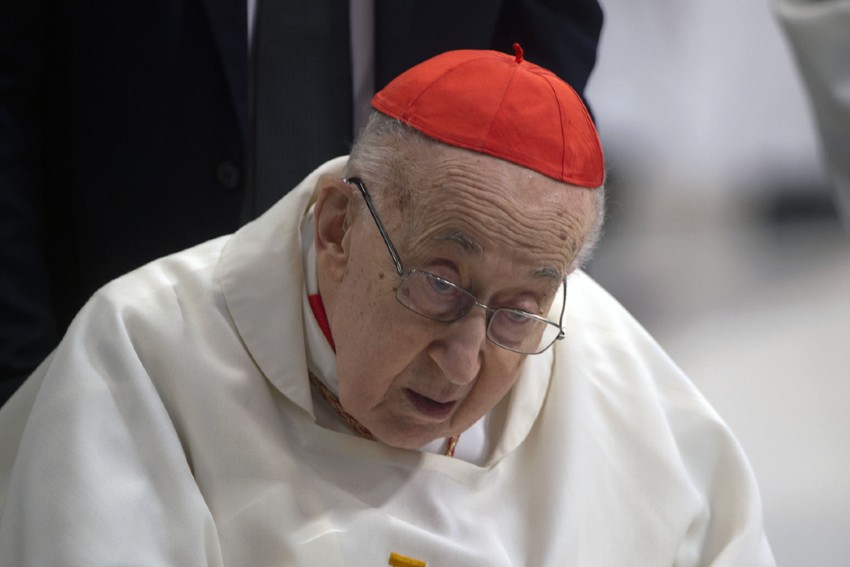
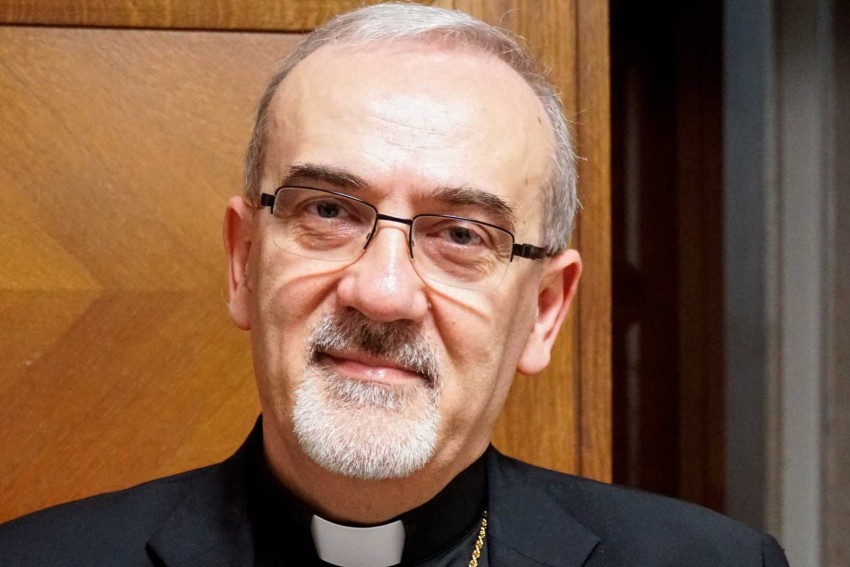
Cardinal Camillo Ruini, 95. Ruini was made a cardinal by Pope John Paul II in 1991, 35 years ago. He served as president of the Italian Episcopal Conference for 16 years, from 1991 to 2007, and as Vicar General — the Pope’s representative — for the Diocese of Rome for 17 years, from 1991 to 2008. Ruini was active as a spokesperson for the Church in Italy and was one of the Church officials who most often appeared on Italian television, and in newspapers and magazines. On March 17, 2010, the Vatican formed a commission to look into the phenomenon of Medjugorje, Bosnia-Herzegovina, where six young people have said they have had visions of Mary since the early 1980s. Ruini was its president. In January 2014 the commission submitted its findings to the Congregation for the Doctrine of the Faith, which led to a 2024 finding that there was nothing against the faith in the first six apparitions. He speaks of Medjugorje in the interview below. Ruini’s episcopal motto is Veritas liberabit nos (“The truth will set us free”)
Here is an Introduction to an interview with Cardinal Ruini, followed by the full text of the interview itself from the February 19 edition of Corriere della Sera (in my own English translation from the Italian original). —RM
Introduction
(link)
At 95, Cardinal Camillo Ruini (born February 19, 1931) looks back (…). Ruini tells Corriere della Sera he grew so old in part due to his simple diet, drinking plenty of water, and doing regular physical exercise.
Childhood, War, Love
His earliest memories date back to his childhood in the 1930s under Fascism, in an Italy that he disliked, overconfident and unaware of its own weaknesses. During the war, he often argued with his father, convinced Italy would win. He, however, understood that it would end badly. He experienced the Allied bombings, and the deaths of friends.
His vocation to the priesthood came, almost instinctively, at the end of high school. An exciting choice, but opposed by his parents. His sister Donata supported him, and she would accompany him throughout his life, even financially.
He never questioned his vocation, despite the sacrifices.
Ruini admits to having “fallen in love” with a woman, more than once. “With God’s help, I resisted,” he says. Heavy sacrifices, but never the thought of leaving the priesthood.
At first enthusiastic about the Second Vatican Council, Ruini grew increasingly uneasy in the post-conciliar era, when — he recalls — even the divinity of Christ and sexual morality were questioned.
For him, the problem was not the Council, but what followed.
Ruini and Successive Popes
His relationship with John Paul II marked a turning point. Their first meeting took place in 1984, during preparations for the Loreto ecclesial conference. Ruini spoke frankly, criticizing the CEI’s approach, and found in the Pope a partner who shared the need for a new evangelization in Italy. From there, a relationship of trust was born. For Ruini, Wojtyla remains the greatest pontiff: “A true world leader.”
His assessment of Benedict XVI was different. A great theologian, but weak in governance. Yet, Benedict’s resignation in 2013 deeply affected him: “It surprised me and I was saddened. In my opinion, it was the wrong decision.” A choice Ruini has never truly agreed with.
His relationship with Pope Francis is more difficult. He doesn’t speak of disappointment, but of surprise. The changes brought by Francis, he says, were too rapid and too profound. He recognizes the courage of the pontificate, but criticizes the lack of attention to tradition: “It’s perhaps no coincidence that he was more loved by non-believers than by believers.” The balance remains open; he says; it’s too early to determine whether he did more good or harm to the Church.
On the other hand, Ruini had an excellent impression of the new Pope Leo, whom he met in the first days of his pontificate: “I’m happy to have this Pope.”
The crisis of Christianity in the West, for him, is a fact. But empty churches and seminaries, he says, do not erase the need for hope and faith.
The answer, he says, must first and foremost be prayer.
Despite everything, he remains optimistic about the future: “Because at the origins of Christianity, there is not only man, but God.”
Ultimately, even at 95, Ruini does not hide his fear of death. Not so much for the end of earthly life, but for what comes after death: God’s judgment. Ruini fears that judgment, but his fear is tempered by faith in divine mercy.
Despite God’s perfect goodness, Ruini believes that there are some, due to lack of repentance, who will be damned.
“An empty hell?” he asks rhetorically. “I don’t believe it.”
[End Ruini introduction]
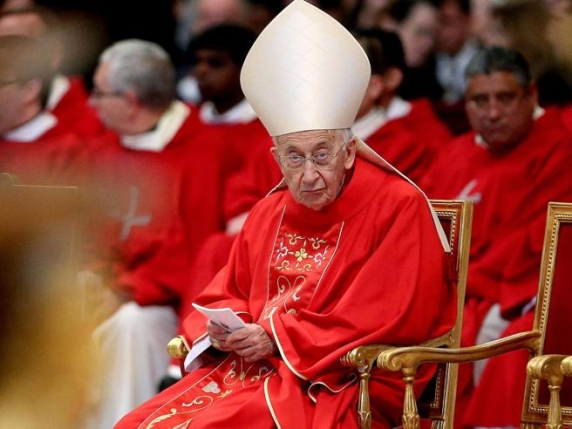
Interview: Full Text
Ruini: “I fell in love three times, but thank God I resisted. Ratzinger was wrong to leave, Bergoglio ignored tradition.” (link)
By Aldo Cazzullo
Cardinal Ruini: “John Paul II was the greatest (…)
Cardinal Ruini, you are 95 today. What is the secret to longevity?
“I don’t know. Perhaps, in ascending order of importance: an orderly life; each person’s DNA; the measure of God’s gift.”
What do you eat and drink? Have you exercised?
“I follow a more or less Mediterranean diet: pasta, vegetables, meat, fruit; nothing special. I drink water. And I’ve been doing a lot of physiotherapy for many years.”
How important is faith? How important is intellectual curiosity about the world?
“Faith and the length of one’s earthly life are two independent quantities: think of the early death of Carlo Acutis. Intellectual curiosity can help keep the brain alive, and thus perhaps extend one’s life.”
What is your earliest memory?
“A meadow on a hill, and my ball rolling against a barbed wire fence and getting a hole. It was the summer of 1934, I was three years old.”
What was Fascist Italy like?
“An Italy I didn’t like. Too self-confident and unaware of its weaknesses.”
Is it true that you argued with your father about the war?
“I often did. My father was convinced we would win the war. I, on the other hand, believed we would lose it.”
Why?
“Because I had learned from my middle school geography book that our adversaries were much richer than us.”
What do you remember about the war?
“The bombings, which didn’t spare my hometown, Sassuolo. The deaths of some friends. The long period spent as a displaced person in my father’s country house. That last period was a very positive one.”
Why?
“I liked life in the fields; I helped the farmers with their work. Then I remember September 8th, with the soldiers who came asking for food and especially clothes, so they could get rid of their uniforms.”
If you had been a few years older, would you have chosen the Social Republic or the partisans?
“Neither side.”
Why did you decide to become a priest?
“I’ve always been a believer and a practicing Catholic. When I was finishing high school, my spiritual director asked me very gently if I’d even considered the possibility of becoming a priest. I liked the proposal, and I said yes almost instinctively. Dedicating myself to God seemed exciting to me.”
But your family didn’t agree, right?
“My father and mother were strongly against it. My sister Donata, then a 12-year-old girl, was in favor, and she supported me, even financially, throughout her life.”
You once confided to the Corriere that you’d fallen in love. Can you tell us more? Did giving up that love weigh on you?
“To be honest, I fell in love, or perhaps better, felt attracted to a woman, more than once. But with God’s help, I always resisted. Naturally, those sacrifices weighed on me. But I never considered making a different choice. I never thought of leaving the priesthood.”
Do you remember those women?
“Of course. At least three or four, at different times. Life is long…”
Is it true that as a young man you were a progressive, pro-conciliar priest?
“I was certainly enthusiastic about the Council; and I still am. However, when, after the Council, the crisis arose that called into question the dogmas of the Catholic faith, I reacted immediately, forcefully opposing it.”
What dogmas?
“Even the divinity of Christ. Not to mention sexual morality. It was a very particular period.”
Do you think the Council went beyond the intentions of John XXIII and Paul VI?
“No, absolutely not. As I told you, we must not confuse the Council and the post-Council period.”
How do you remember your first meeting with Pope Wojtyla?
“It was the autumn of 1984, and I was auxiliary bishop in Reggio Emilia. But I was also one of the three vice-presidents of the preparatory committee for the Loreto ecclesiastical conference. One afternoon, I received a phone call from Monsignor Re, then an assessor of the Secretariat of State, informing me that I was expected to join him for dinner with the Pope. John Paul II immediately addressed the matter, asking me for news and assessments on the preparations for the conference. I responded with complete frankness, and I realized that the Pope appreciated my frankness and my assessments. From then on, he called me often, and I enjoyed his trust.
What did you say to the Pope?
“I criticized the CEI’s approach. The Conference of Bishops thought the world was already secularized. John Paul II, on the other hand, was convinced that secularization was being overcome, and a new evangelization was needed, aimed at the already Christian peoples who were at risk of losing their faith. I thought, with the Pope, we could hold our positions and carry out a work of evangelization.”
And about communism?
“John Paul II was against the historic compromise [in Italian, “compromesso storico,” referring to a proposal to make an ‘historic compromise’ with communism, by allowing the Communist Party to become a part of the Italian governing coalition]. For him, Christians who didn’t think about communism in terms of ‘us’ and ‘them’ didn’t understand.”
What was your relationship with [Romano] Prodi really like?
“I was a very good friend of Prodi and his large family. So much so that I celebrated his wedding with Flavia Franzoni: Our paths diverged around 1990 when I remained centered, while he leaned left. In hindsight, I think that both Prodi and I misunderstood each other’s positions, believing them to be our own. That wasn’t true. Today, our relationship is decidedly good, even if we don’t speak often.
And your relationship with Berlusconi?
“I met him when he ‘entered the political arena,’ to use his term. I immediately realized that his lifestyle had problematic aspects. But his political action seemed decisive to me in stopping communism, in introducing bipolarism in Italy, and in resisting the wave of secularism that was already threatening the Church’s non-negotiable values.”
By 1994, the communists were almost gone.
“Call them post-communists, if you prefer. The fact remains that, if Berlusconi hadn’t existed, Occhetto [an Italian communist party leader] would have been in power.
And his lifestyle?
“I remember that we Catholics were passionate about John Kennedy; and it turned out that he wasn’t above reproach either.”
Do you regret having in some way endorsed, with your authority, the Berlusconi era? Or would you make that choice again?
“I don’t regret it. Today the situation is different. I can only say that my basic orientations haven’t changed.”
Who was the greatest Pope the Church has had in these 95 years?
“Difficult question. For the Church, it’s a fortunate period, in which several great pontiffs have succeeded one another. I’m thinking of Pius XII, John XXIII, Paul VI, John Paul II, Benedict XVI.”
He has to choose.
“For me, the greatest is John Paul II.”
Why?
“Because he was a true world leader.”
Was Benedict XVI a greater theologian than a pontiff? Did he know how to govern?
“Above all, he was a great theologian. Governance was his weak point.”
You were one of the protagonists of the 2005 conclave: did a real alternative to Ratzinger ever emerge?
“Conclaves are strictly confidential. I’ll just say that, in my opinion, no real alternatives emerged.”
What personal memories do you have of that conclave?
“A positive, confident atmosphere. We were returning from the funeral of John Paul II, which was the pinnacle of the Church’s prestige. And then I remember the oath in the Sistine Chapel: ‘I swear by Christ who will judge me…’ Saying those compelling words under the gaze of Michelangelo’s Judging Christ was a shock that I still remember today.”
How did you experience Ratzinger’s resignation?
“It totally surprised me, and I was very sorry.”
Was it a mistake?
“I’ll tell you the truth: it was a bad decision, at least it seems that way to me. Of course, he knew his circumstances better than I did, so I don’t want to judge. I wasn’t convinced by his resignation.”
On the dresser in front of me, I see photos of Wojtyla, Ratzinger, and Prevost; I don’t see the one of Bergoglio.
“Turn around. It’s there, behind you.”
Did Pope Francis disappoint you?
“With Pope Francis, I found myself in difficulty. The change was too great and sudden. More than disappointed, I was surprised.”
How would you assess his pontificate? Has it done more good or more harm to the Church?
“It seems to me to be a complex assessment, with very positive aspects and others much less so. It’s too early to judge which of them prevail.”
Tell me one positive thing about Francis.
“His great courage.”
And one negative thing.
“He paid too little regard to tradition. It’s perhaps no coincidence that he was more beloved by non-believers than by believers.”
And what impression do you make of Leone? Have you met him?
“He granted me an audience in the very first days of his pontificate. My impression is excellent. I’m happy to have this Pope.”
Today, at the helm of the Italian Bishops’ Conference, which you led for 16 years, is a cardinal considered progressive. Are the Italian bishops too “left-wing”?
“I don’t think the Italian episcopate as a whole can be considered left-wing. The positions are diverse, as has always been the case and as is natural. It was like that in my day, too.”
You once told the Corriere: culture is on the left, but the country is on the right. Why this dichotomy, in your opinion?
“It’s a dichotomy that exists in many countries, not just in Italy. It probably stems from the fact that ordinary people give more weight to practical aspects, while intellectuals focus on issues they consider to be of principle.”
What is your political and personal assessment of [Italy’s present conservative Prime Minister] Giorgia Meloni?
“Definitely positive in both aspects, both political and personal.”
Do you know her? Do you talk to her?
“I’ve known her for many years and we enjoy talking, within her time limits. She’s a very direct person, very frank. She’s also very affectionate with me. We have a true friendship, we always send each other greetings.”
How?
“The nurse who comes to see me for treatment also goes to her.”
What do you think of [US President Donald] Trump?
“I have a negative opinion. Trump has disrupted American and world politics, going in a very questionable direction. And I don’t like his unscrupulousness.”
Would you return to the Latin Mass?
“Certainly not. It’s very important that people understand the language in which it is celebrated.”
But they consider you a traditionalist.
“Tradition doesn’t mean going backwards. On the contrary. ‘Betray’ means passing from one hand to another. Tradition is the continuity of the Church.”
Has the Church given up on talking about what used to be called non-negotiable values? The sacredness of life, the indissolubility of marriage, sexual morality?
“We cannot give up on talking about these values. They are part of the content of our faith, of Christian ethics. Today we talk about them less than before; but this is a gap we must address.”
In the Gospel according to Luke, Jesus asks: “When the Son of Man returns, will he find faith on earth?” How would you answer this question?
“I would answer: ‘Lord, you know it; I hope so with all my heart.'”
But when do you think Christ will return?
“Only God knows that, too.”
So it’s not certain that he will still find faith on earth?
“Unfortunately, no.”
Is Christianity in crisis? How do you see its future?
“At least in the West, the crisis of faith is undeniable. And our first response must be prayer. Much prayer, so that the light of faith does not fade but takes on new strength. I am nevertheless optimistic about the long-term future of Christianity.”
Why?
“Because at its origin there is not only man. There is God.”
Does an anti-Christian sentiment exist in the world?
“It certainly exists, and has existed in the most varied forms since the beginning of Christianity. Let us remember the words of Jesus: ‘If they persecuted me, they will also persecute you.'” The lack of solidarity we believers have with our persecuted brothers is striking.
Churches are increasingly empty, but people desperately need hope and faith. How do you explain this contradiction?
“It’s a contradiction that’s more apparent than real. Those who have lost their faith don’t necessarily no longer need hope, and even faith. It’s a hole that can’t be filled, and it testifies that we are made for God. Then there’s the shortcomings of us believers in the work of evangelization.”
Seminaries are also empty. Isn’t it cruel to force priests not to have a family?
“It’s not an imposition, but a freely accepted condition. Priestly celibacy has its problems, but also its advantages. In my opinion, much greater.”
Why can’t a woman be a priest?
“The Church cannot ordain women priests, because the priest is configured to Christ, who is male.”
Are you afraid of death?
“Yes. Especially because death is followed by God’s judgment on our lives. Fear is eased by trust in God’s mercy, which is infinite.”
So is it possible for hell to be empty?
“I don’t believe so. I fear that an empty hell isn’t empty at all.”
Have you ever doubted the existence of God, or the resurrection of the flesh?
“Doubt in the strict sense, no. Temptation is another matter. I’ve had many temptations regarding faith, even strong ones.”
But what happens to our body between death and resurrection on the Day of the Last Judgment?
“Our body lies in the tomb, awaiting resurrection for eternal salvation or condemnation. Our immortal soul, however, is already in heaven, or in hell, or in purgatory. The particular judgment on each of us occurs already at the moment of death.”
You’ve written a beautiful book about the afterlife, but it doesn’t provide any certainties. For example, there’s a chapter in which you recall near-death experiences—the light after the tunnel, the feeling of bliss—but then you conclude: these people aren’t really dead, so their story isn’t conclusive. What should we expect, then?
“I’d like to clarify: in my book, I acknowledge that reason alone doesn’t give us certainty about the afterlife; but I clearly state that we can achieve this certainty through faith.”
But how do you personally imagine the afterlife?
“For those who are saved, the afterlife is the vision of God, immediate union with Him. As well as union with our deceased brothers and sisters. The Gospels use very beautiful images in this regard; for example, that of the banquet. A solemn banquet, where we eat together and are happy together. Maintaining our individuality.”
You were president of the Commission on Medjugorje. What did you think?
“Our Commission believed the first seven apparitions were real. It really was Our Lady. After that, things got confusing, and we didn’t make a precise judgment. Whether they were apparitions or suggestions, I don’t know.”
Who is the most intelligent person you’ve ever met?
“I don’t feel qualified to judge. I can say that I’ve known quite a few extremely intelligent people. For example, John Paul II, or, in a different way, my theology professor at the Gregorian University, Bernard Lonergan.”
Was Wojtyla that intelligent?
“Imagine, he read two books at the same time: the more difficult one himself, while having the easier one read aloud to him. St. Thomas Aquinas, on the other hand, dictated two books at the same time.”
And the kindest person?
“All the more reason I don’t feel qualified to judge. I’ve also known many good people. I’ll limit myself to mentioning two who are actually saints: Mother Teresa of Calcutta and John Paul II.”
He had no doubts.
“No, not him. A rock-solid faith. When he prayed, he was truly in conversation with God.”
[End Cardinal Ruini interview]
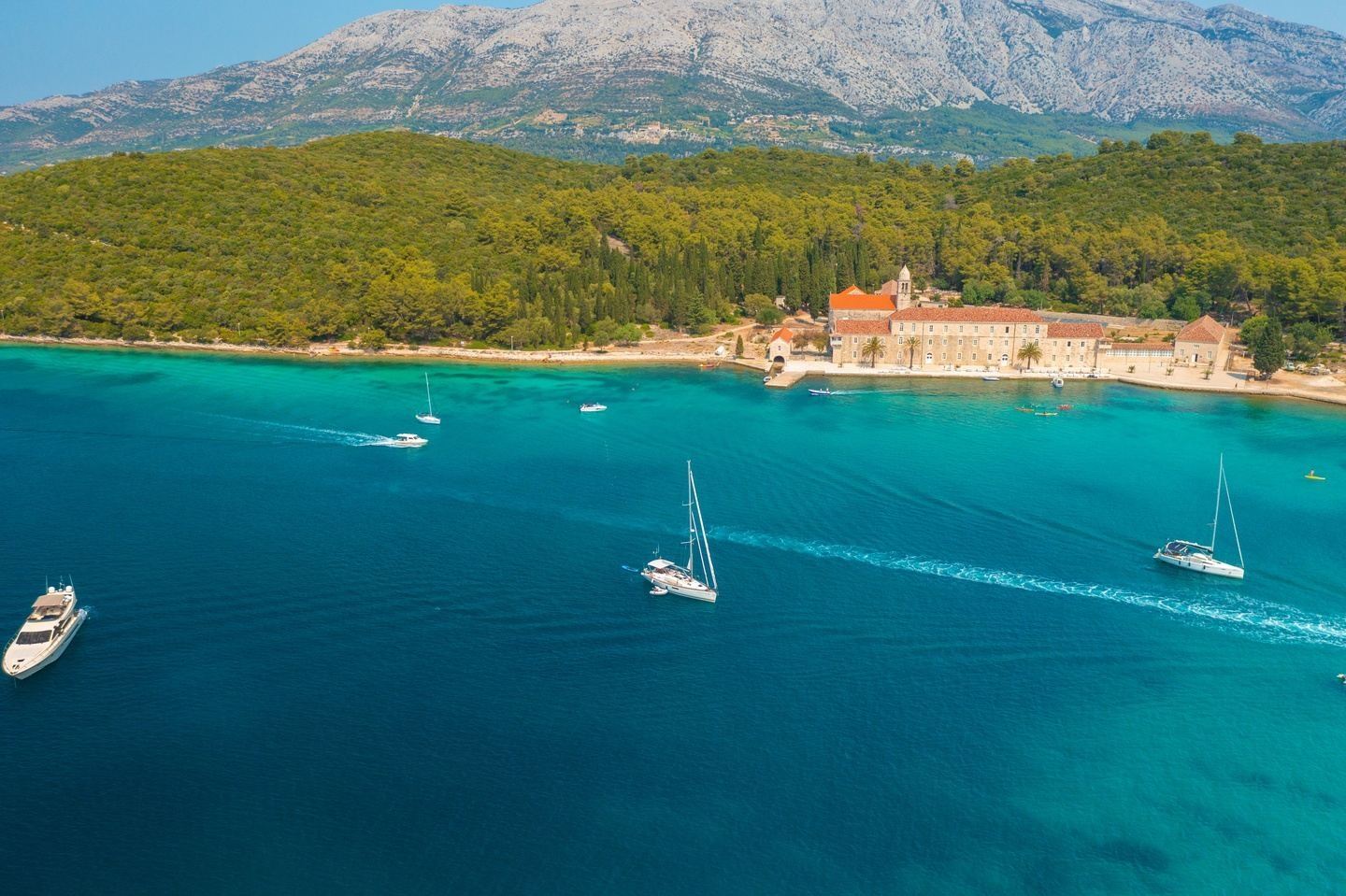
Rooted in Hope: Private Island Retreat with Bishop Athanasius Schneider
June 15 – June 21, 2026
Inside the Vatican Pilgrimages invites you to join a special Pilgrimage and Retreat with Bishop Athanasius Schneider, June 15-21, 2026.
Highlights of our Croatia Retreat with Bishop Schneider, June 2026
- Five-day private island retreat with Bishop Schneider at an ancient, recently restored monastery
- Daily Mass celebrated in the Traditional Latin Rite
- Free time to pray, explore the island, swim in the blue Adriatic waters, walk with other pilgrims along the island path, and travel to nearby islands in a private boat
- One night in Split with time to explore the city on your own