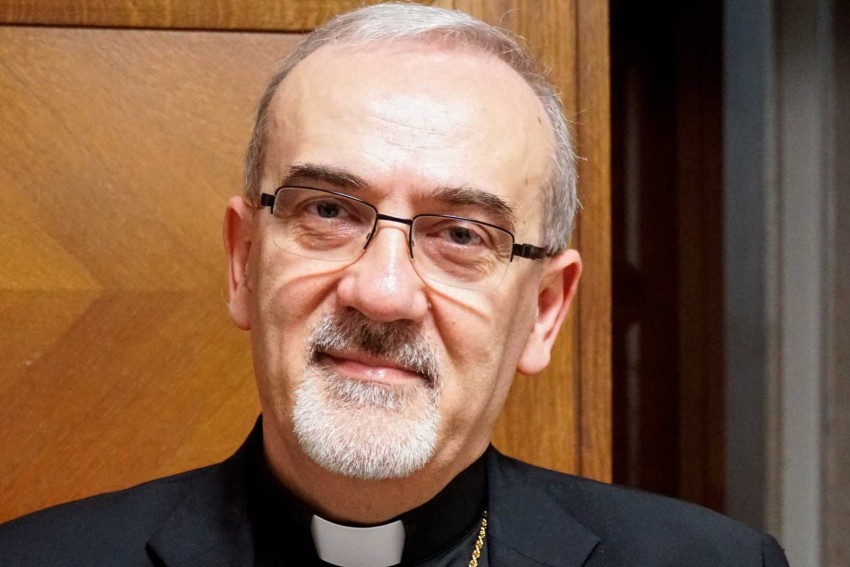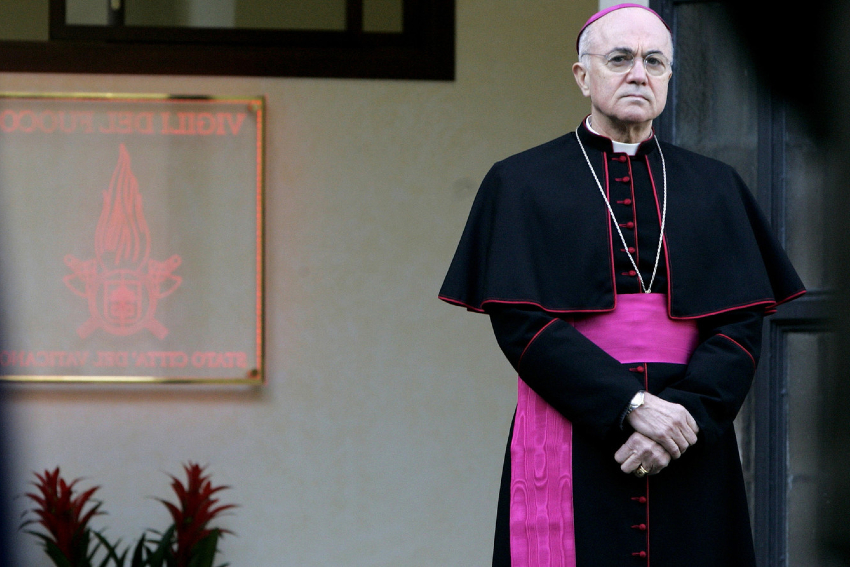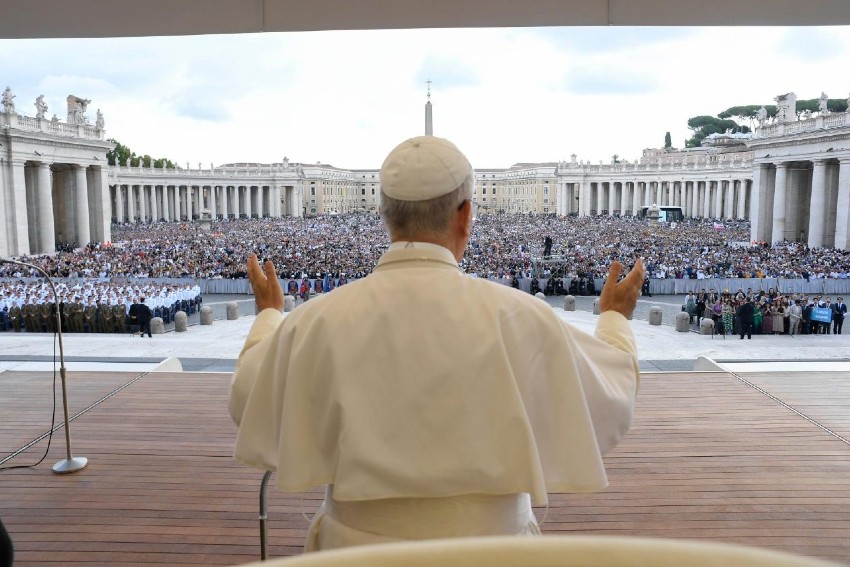


Two images of top Italian Vaticanist Franca Giansoldati, with the late Pope Francis. Her writing, for Rome’s daily Il Messaggero, is top-flight, and today she published a useful, even precious, guide to what will happen in the papal conclave, which begins today, May 7…
Letter #38, 2025, Wednesday, May 7: Giansoldati sets up the Conclave
This afternoon, Wednesday, May 7, the papal conclave begins.
I will be podcasting on YouTube Urbi et Orbi Communications channel, live at this link or this link. (Membership is completely free, and once you sign in, you get a little message on your phone or email whenever we go live. Please consider joining us.)
Italian Vaticanist Franca Giansoldati, who writes for the Rome daily Il Messaggero, is one of the best and most well-informed Vatican reporters in the world.
Today, she wrote an absolutely fundamental overview of what will happen in this upcoming Conclave (link).
Here is her report.
She begins by describing the 133 voting cardinals (all under age 80) coming from various residences in Rome into Vatican City yesterday afternoon, some on foot, dragging a small suitcase behind them, causing some journalists to say that they did not bring enough clothes with them to stay more than 3 days, indicating that… they expected the Conclave to last just two or three days…
But Giansoldati says, that may not be the case…
Then she notes that, even after a week of meetings, these cardinals stilldo not know each other very well — and this means, they relay on “networks” (religious orders, Salesians, Franciscans, Jesuits, Dominicans, each order has several cardinals among their numbers, and the “network of the Vatican diplomatic service, to “guide” them as they assess who among their number may be “the one” who will become successor of Peter, and guide the Church in these very challenging times…
Maria, ora pro nobis. Mary, pray for us.
–RM
Conclave, first smoke today at 7:30 pm: cardinals divided (but negotiations continue)
At 4:30 pm the 133 electors meet in the Sistine Chapel to elect Pope Francis’ successor. Negotiations continue but indecision reigns. The “kingmakers” are at work. Smoke expected for 7:30 pm
by Franca Giansoldati, Il Messaggero
Wednesday 7 May 2025
They say that hope is everything.
It was enough to see yesterday morning the first cardinals who, to get a little ahead, took possession of the rooms assigned to them.
Several arrived at Santa Marta dragging a trolley with the necessary to stay there for three days at most.
Which means that in their hearts they are confident of electing the new successor of Peter quickly, even if rationally they are more than aware that finding a compromise and untying all the knots that exist will not be very easy.
Spes contra spem. [“Hope against hope.”]
In fact, that light baggage clashed with what the 133 electors were able to personally ascertain by participating in the long sessions of the general congregations, where many fears materialized, especially due to the lack of strong names on which to converge.
The unknowns about the profiles of the papabili, the lack of mutual knowledge, many areas still to be cleared.
INTUITION
The “newbie” cardinals who have never set foot in a conclave and have had very little contact with the curia (they are practically the majority) will rely a little on intuition and a little on their own religious lobbies of reference.
Real networks.
The Salesians, for example, who mass together, as do the Jesuits, the Franciscans and then those who are part of diplomacy, a large transversal reality with its own solid network, to the point of having been defined by Pope Francis as a caste.
Of course, there are some papabili who already have a significant number of votes:
— the former Secretary of State, Pietro Parolin, stands out at the head, followed by
— the Salesian Artime (although he has already said not to look at him but at his brother Lopez Romero), then
— the Hungarian Erdo,
— the Filipino Tagle,
— the Frenchman Aveline,
— the Maltese Grech,
— the Franciscan Pizzaballa.
THE KING MAKERS
Since none of them on paper has the concrete possibility of reaching the very large quorum of 89 votes (two thirds) in the first instance, a figure never before so high, the most difficult conclave since the sudden death of John Paul I (1978) has practically made the cardinals understand that the election this time will be determined by the role of the king makers, figures of particular weight and reference, capable of moral suasion, of mediating and of ferrying the votes to one or the other.
Of course, in the past, the king makers have also distinguished themselves for their work behind the scenes, especially during convivial moments at Santa Marta, during lunch or after dinner.
Yet this time only these senior cardinals will be able to decisively guide the negotiations and common reflections.
The most important king maker is Parolin, who as a former secretary of state, being very well known, can move with a certain mastery.
It is a shame, however, that being also the number one papabile, he could even be penalized by this sort of intrinsic conflict of interests.
Another great king maker is certainly the theologian Gerhard Mueller, a German cardinal and for years prefect of the Dicastery of Faith who will assume an enormous guiding role in keeping the bar straight on the magisterium.
And then the Jesuit Hollerich who structured the entire synodal plan under Francis, the American Dolan, the German Marx, the Hungarian Erdo, the Italian Filoni.
As things are going, the conclave begins with the unknown of the name and the time available.
Everyone would like to avoid giving the world the bad impression of splits and divisions, but at the moment the synthesis has yet to be found.
And so the tensions are increasing as the phases enter into full swing.
More than a pastor Pope, as has been indicated so far in the conclave identikit, perhaps a unifying Pope is needed, capable of taking needle and thread and starting to mend the many tears in the ecclesial fabric.
Some suggest a “Pope of guarantee,” respectful of the rules and of good governance.
Someone else points out that one could also go fishing for some external figure, for example someone over eighty, such as (the Italian) Bagnasco, 82, for years head of the CEI and twice president of the European episcopal conferences.
[Note: Since he is 82, Bagnasco will not be in the Conclave and will not vote; but the cardinals, if they wish, can elect an over-80 cardinal who is not present; and, in theory, they could even elect a non-cardinal, as many of you know well; even a Catholic layman, who would then have to be ordained and consecrated bishop, before becoming Bishop of Rome.]
THE DETAILS
Beyond the whirlwind of speculation that is a waste of time, the gigantic conclave machine has started to move.
Yesterday, during the last general congregation, before everyone’s eyes, the Fisherman’s ring and the lead seal that belonged to Pope Francis were annulled, as expected.
An official of the Secretariat of State made them unusable with a particular procedure.
A thought then went to peace in Ukraine and the Middle East with a joint statement in which it was “noted with regret” that not only have no steps forward been made for peace but that “the attacks have intensified”.
This was followed by an appeal to the parties involved “for a permanent ceasefire”.
In the meantime, the details in the Sistine Chapel have been completed.
The pews are covered with crimson fabric, the Gospel is placed in full view, the Abacus with the 133 numbered spheres, as many as the voters.
The two stoves were then tested, one is made of cast iron and will be used to destroy the voting papers, the other only to burn a special chemical stick that allows for a prolonged puff of smoke.
Black or white in the event of an election.
For over six minutes, people in the square will be able to see if the Church has a new Pope by observing the color of the smoke coming out of the chimney.
The Vatican Fire Brigade assembled it, made it safe and tested it two days ago, climbing onto the roofs.
The first smoke is expected this afternoon around 7:30 pm, and from tomorrow, for three consecutive days, one is scheduled in the morning, around midday and the other at sunset.
Inside the Sistine Chapel, however, there are four votes each day, two in the morning and two in the afternoon.
If by chance a quorum were to be reached at the first vote in the morning, the white smoke would arrive immediately, without waiting any longer.
THE LOCKDOWN
As required by the Constitution, this morning, the solemn mass Pro Eligendo Romano Pontifice will be celebrated in St. Peter’s, entrusted to the ninety-year-old Dean Cardinal Giovanni Battista Re.
What he will say will have to be followed carefully: generally this homily is a road map structured precisely to help the electors unravel the tangle when they enter their lockdown.
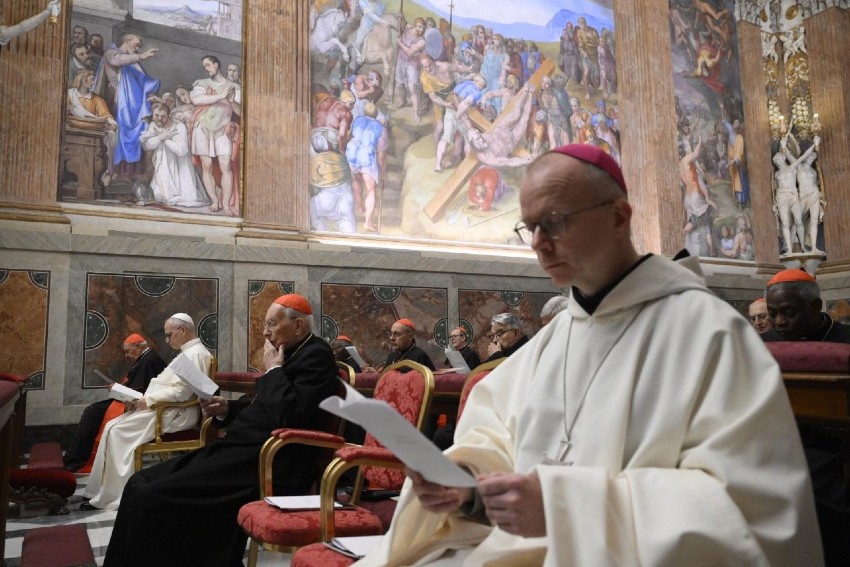
In the afternoon, the procession of cardinals will first head towards the Pauline Chapel to pray, and then there will be the entrance into the Sistine Chapel.
Each will take their place under the Last Judgement.
Finally, the doors will close and only then, silence will descend upon them to find an answer.
And reach the very difficult quorum.
Follow my daily coverage from Rome on the conclave.
Subscribe to Urbi et Orbi’s YouTube channel.
Click the bell to receive notifications when we go live from Rome.