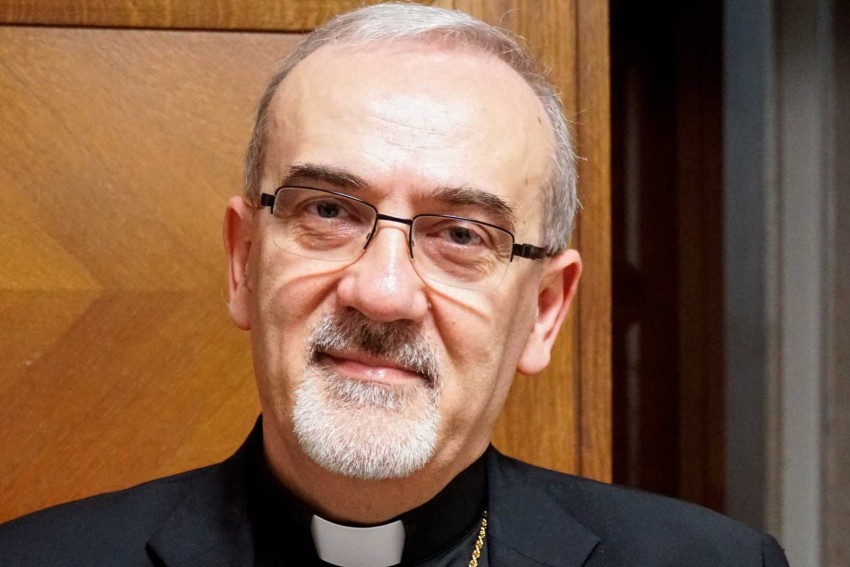
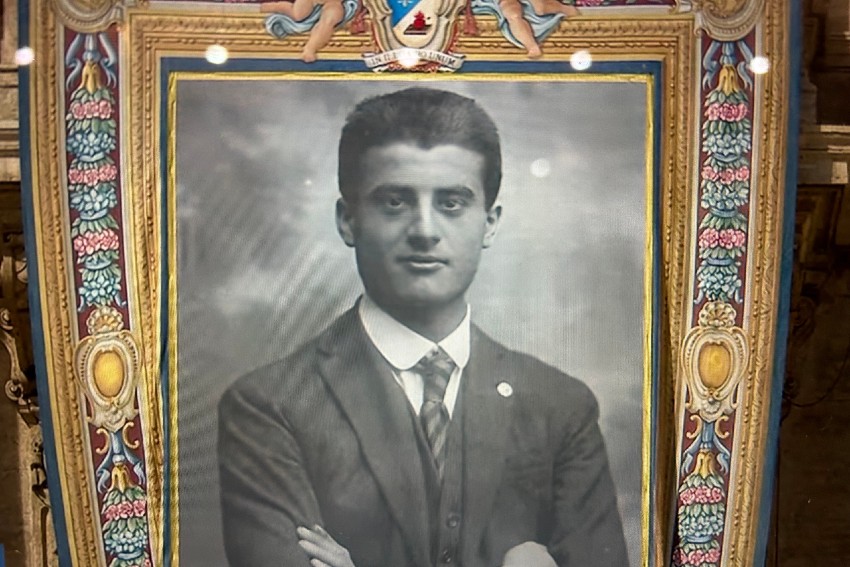
The new St. Pier Giorgio Frassati, canonized yesterday, September 7

The new St. Carlo Acutis, also canonized yesterday September 7

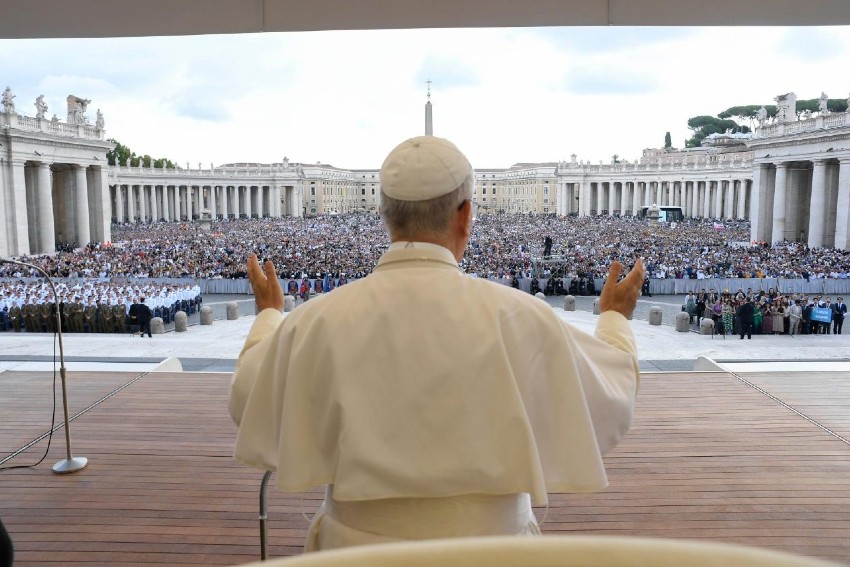
Pope Leo XIV at yesterday’s canonization in Rome. Leo will turn 70 in one week, on September 14, Feast of the Exaltation of the Holy Cross
Letter #59, 2025, Monday, September 8: Two New Saints
Yesterday in Rome was an extraordinarily beautiful day.
St. Peter’s Square was filled with about 80,000 mostly young people as Pope Leo XIV canonized two saints:
(1) St. Carlo Acutis, who was 15 when he died in 2006, almost 20 years ago now, and
(2) St. Pier Giorgio Frassati, who was just 24 when he died in 1925, exactly one century ago.
So the Church, in this first canonization by Pope Leo, has been given two very young saints as models of holiness for the young people of today.
Below, a report on the canonization from Vatican News, followed by the text of the Pope’s homily, and concluded by an eloquent reflection by Delia Buckley Gallagher (link), an American journalist who was a writer and editor at Inside the Vatican for some time just after the year 2000, 25 years ago.
Delia argues that this canonization was in a spiritual sense, perhaps, “the first day” of the pontificate of Leo, with everything else that has taken place from May 8, when he was elected, up until now up now just prologue…
—RM
Here is a piece on the canonization from the official Vatican news service, Vatican News:
Pope: Saints call us to look to God, make masterpieces of our lives
Addressing more than 80,000 faithful filling St. Peter’s Square on Sunday, September 7 for the Mass with the canonization of Pier Giorgio Frassati and Carlo Acutis, Pope Leo XIV says the examples of these two young Saints invite all of us, especially young people, to direct our lives upwards to God and make them masterpieces of holiness, service, and joy.
Vatican News
September 7, 2025
Presiding over the Mass and canonization of Pier Giorgio Frassati and Carlo Acutis in Saint Peter’s Square, Pope Leo XIV paid tribute to their extraordinary witnesses to faith, hope, and trust in God, and to the Lord’s great plan for eternal joy and happiness. The Pope declared the two young Italians Saints at the start of the celebration on a stunningly beautiful late summer day, Sunday 7 September.
In his homily, the Pope reflected on the extraordinary witness of both new Saints.
Recalling words from the first Sunday reading from the Book of Wisdom, the Pope observed that, like King Solomon, these young men sought the gift of wisdom to better understand God’s plans for our lives and world, and follow them faithfully. And in doing so, they used their gifts to bring others to God through their example, words, and actions.
Giving ourselves to the Lord
In the Gospel reading, Jesus speaks to us of God’s plan, to which we must commit wholeheartedly, abandoning ourselves “without hesitation to the adventure that he offers us, with the intelligence and strength that comes from his Spirit,” the Pope recalled.
Young people often face crossroads in their lives and have to make difficult choices, the Pope observed; and, recalling the example of Francis of Assisi, he pointed out that the Saint opted for “the wonderful story of holiness that we all know, stripping himself of everything to follow the Lord, living in poverty and preferring the love of his brothers and sisters, especially the weakest and smallest, to his father’s gold, silver, and precious fabrics.”
Saying “yes” to God
So many saints down through history have made similar courageous choices, looking up to God, and, while they were very young, the Pope recalled, offering their “yes” to God, giving themselves complete to Him, “keeping nothing for themselves.”
The Pope recalled how Saint Augustine felt a voice deep within him that said: “I want you”, and “God gave him a new direction, a new path, a new reason, in which nothing of his life was lost.”
Pier Giorgo Frassati, beacon for lay spirituality
Describing the life of Saint Pier Giorgio Frassati, a young Italian man of the early 20th century, his participation in Catholic associations and service to the poor, the Pope said that also today “Pier Giorgio’s life is a beacon for lay spirituality,” since faith was not a private matter and could be lived in community in with membership in ecclesial associations and through generous commitment to political life and service to the poor.
Carlo Acutis, witness of holiness in simplicity
Speaking about the witness of young Italian Saint Carlo Acutis, a teenager of our own day, the Pope spoke about how he encountered Jesus in his family, thanks to his parents, Andrea and Antonia, recalling their presence at this celebration along with his two siblings, Francesca and Michele.
Saint Carlo also found and lived his faith through school, but especially the sacraments celebrated in the parish community, the Pope went on to say, noting how “he grew up naturally integrating prayer, sport, study and charity into his days as a child and young man.”
Cultivating love for God and neighbour
Daily Mass, prayer, and especially Eucharistic Adoration, marked the lives of Saints Pier Giorgio and Carlo in cultivating their love for God and neighbor through simple acts of charity, the Pope said.
And even as illness struck both of them, cutting their lives short, they continued to bear witness to hope and offer themselves to God, the Pope added, recalling how Pier Giorgio once said: “The day of my death will be the most beautiful day of my life”; and how young Carlo often remarked that “heaven has always been waiting for us, and that to love tomorrow is to give the best of our fruit today.”
Making “masterpieces” of our lives
In conclusion, Pope Leo underscored how both Saints Pier Giorgio Frassati and Carlo Acutis invite everyone, “especially young people, not to squander our lives, but to direct them upwards and make them masterpieces.”
The Pope said:
“They encourage us with their words: ‘Not I, but God,’ as Carlo used to say.
“And Pier Giorgio: ‘If you have God at the center of all your actions, then you will reach the end.’
“This is the simple but winning formula of their holiness. It is also the type of witness we are called to follow, in order to enjoy life to the full and meet the Lord in the feast of heaven.”

The Pope’s Homily
Here is the text of Pope Leo’s impromptu remarks addressed to the vast crowds, followed by his prepared homily:
Pope Leo XIV
Impromptu remarks before Holy Mass and the Rite of Canonization
September 7, 2025
Good morning, everyone! Happy Sunday and welcome! Thank you!
Brothers and sisters, today is a wonderful feast for all of Italy, for the whole Church, for the whole world! Before beginning the solemn celebration of the Canonization, I wanted to greet you all and say a few words, because, while the celebration is very solemn, it is also a day of great joy! I wished especially to greet the many young people who have come for this Holy Mass! It is truly a blessing from the Lord to be here together with all of you who have come from different countries. It is truly a gift of faith that we want to share.
After Holy Mass, if you can be patient for a little while, I hope to come and greet you in the Square. So, if you are far away now, let us hope that we can at least greet each other afterwards. I greet the families of the two Blesseds, soon to be Saints, the official Delegations, the many bishops and priests who have come. Let us give all of them a round of applause; and thank you for being here, consecrated men and women, and Catholic Action!
Let us prepare ourselves prayerfully for this liturgical celebration, with open hearts, and truly desire to receive this grace from the Lord. Let each of us also feel in our hearts what Pier Giorgio and Carlo experienced, namely this love for Jesus Christ, especially in the Eucharist, but also in the poor, in our brothers and sisters. All of you, all of us too, are called to be Saints. May God bless you! Enjoy this celebration! Thank you for being here!
* * *
Homily
Dear brothers and sisters,
In the first reading, we heard a question: [Lord,] “who has learned your counsel, unless you have given wisdom and sent your holy spirit from on high?” (Wis 9:17).
This question comes after two young Blesseds, Pier Giorgio Frassati and Carlo Acutis, were proclaimed saints, and this is providential because in the Book of Wisdom, this question is attributed to a young man like them: King Solomon.
Upon the death of his father David, he realized that he had many things: power, wealth, health, youth, beauty, and the entire kingdom. It was precisely this great abundance of resources that raised a question in his heart: “What must I do so that nothing is lost?”
Solomon understood that the only way to find an answer was to ask God for an even greater gift, that of his wisdom, so that he might know God’s plans and follow them faithfully. He realized, in fact, that only in this way would everything find its place in the Lord’s great plan. Yes, because the greatest risk in life is to waste it outside of God’s plan.
Jesus, too, in the Gospel, speaks to us of a plan to which we must commit wholeheartedly.
He says: “Whoever does not carry the cross and follow me cannot be my disciple” (Lk 14:27); and again: “none of you can become my disciple if you do not give up all your possessions” (v. 33).
He calls us to abandon ourselves without hesitation to the adventure that he offers us, with the intelligence and strength that comes from his Spirit, that we can receive to the extent that we empty ourselves of the things and ideas to which we are attached, in order to listen to his word.
Many young people, over the centuries, have had to face this crossroad in their lives.
Think of Saint Francis of Assisi, like Solomon, he too was young and rich, thirsty for glory and fame. That is why he went to war, hoping to be knighted and adorned with honors. But Jesus appeared to him along the way and asked him to reflect on what he was doing.
Coming to his senses, he asked God a simple question: “Lord, what do you want me to do?” (Legend of the Three Companions, cap. II: Fonti Francescane, 1401).
From there, he changed his life and began to write a different story: the wonderful story of holiness that we all know, stripping himself of everything to follow the Lord (cf. Lk 14:33), living in poverty and preferring the love of his brothers and sisters, especially the weakest and smallest, to his father’s gold, silver and precious fabrics.
How many similar saints we could recall! Sometimes we portray them as great figures, forgetting that for them it all began when, while still young, they said “yes” to God and gave themselves to him completely, keeping nothing for themselves. Saint Augustine recounts that, in the “tortuous and tangled knot” of his life, a voice deep within him said: “I want you” (Confessions, II, 10,18). God gave him a new direction, a new path, a new reason, in which nothing of his life was lost.
In this setting, today we look to Saint Pier Giorgio Frassati and Saint Carlo Acutis: a young man from the early 20th century and a teenager from our own day, both in love with Jesus and ready to give everything for him.
Pier Giorgio encountered the Lord through school and church groups — Catholic Action, the Conferences of Saint Vincent, the FUCI (Italian Catholic University Federation), the Dominican Third Order — and he bore witness to God with his joy of living and of being a Christian in prayer, friendship and charity.
This was so evident that seeing him walking the streets of Turin with carts full of supplies for the poor, his friends renamed him “Frassati Impresa Trasporti” (Frassati Transport Company)! Even today, Pier Giorgio’s life is a beacon for lay spirituality. For him, faith was not a private devotion, but it was driven by the power of the Gospel and his membership in ecclesial associations. He was also generously committed to society, contributed to political life and devoted himself ardently to the service of the poor.
Carlo, for his part, encountered Jesus in his family, thanks to his parents, Andrea and Antonia — who are here today with his two siblings, Francesca and Michele — and then at school, and above all in the sacraments celebrated in the parish community. He grew up naturally integrating prayer, sport, study and charity into his days as a child and young man.
Both Pier Giorgio and Carlo cultivated their love for God and for their brothers and sisters through simple acts, available to everyone: daily Mass, prayer, and especially Eucharistic Adoration. Carlo used to say: “In front of the sun, you get a tan.
In front of the Eucharist, you become a saint!”
And again: “Sadness is looking at yourself; happiness is looking at God. Conversion is nothing more than shifting your gaze from below to above; a simple movement of the eyes is enough.”
Another essential practice for them was frequent Confession.
Carlo wrote: “The only thing we really have to fear is sin;” and he marveled because — in his own words — “people are so concerned with the beauty of their bodies and do not care about the beauty of their souls.” Finally, both had a great devotion to the saints and to the Virgin Mary, and they practiced charity generously. Pier Giorgio said: “Around the poor and the sick, I see a light that we do not have” (Nicola Gori, Al prezzo della vita: L’Osservatore romano, 11 February 2021).
He called charity “the foundation of our religion” and, like Carlo, he practiced it above all through small, concrete gestures, often hidden, living what Pope Francis called “a holiness found in our next-door neighbors” (Apostolic Exhortation Gaudete et Exsultate, 7).
Even when illness struck them and cut short their young lives, not even this stopped them nor prevented them from loving, offering themselves to God, blessing him and praying to him for themselves and for everyone.
One day Pier Giorgio said: “The day of my death will be the most beautiful day of my life” (Irene Funghi, I giovani assieme a Frassati: un compagno nei nostri cammini tortuosi: Avvenire, 2 agosto 2025). In his last photo, which shows him climbing a mountain in the Val di Lanzo, with his face turned towards his goal, he wrote: “Upwards” (Ibid).
Moreover, Carlo, who was even younger than Pier Giorgio, loved to say that heaven has always been waiting for us, and that to love tomorrow is to give the best of our fruit today.
Dear friends, Saints Pier Giorgio Frassati and Carlo Acutis are an invitation to all of us, especially young people, not to squander our lives, but to direct them upwards and make them masterpieces. They encourage us with their words: “Not I, but God,” as Carlo used to say. And Pier Giorgio: “If you have God at the center of all your actions, then you will reach the end.”
This is the simple but winning formula of their holiness. It is also the type of witness we are called to follow, in order to enjoy life to the full and meet the Lord in the feast of heaven.
[End, Pope Leo’s homily]

Pope Leo’s First Saints
Reflections on a brilliant day at the Vatican
September 7, 2025
In some way, today felt like the real start of Pope Leo XIV’s pontificate. In 25 years of covering Popes I have rarely seen St. Peter’s Square so alive and a Pope so engaged with the faithful. The canonization of Pier Giorgio Frassati and Carlo Acutis, the first saints canonized by Leo, seemed to have something Providential about it.
The Pope did not choose to have these two young men as the first that he would make saints, of course.
Acutis was due to be canonized on the day of Pope Francis’ funeral in April and so had to be moved. Frassati was already on the calendar, originally for August 3rd until he was moved to be canonized together with Acutis.
So it was a logistical thing.
But Providence works with logistics too and it felt right that these two young men, outstanding examples of steadfast interior grace combined with authentic goodness and vitality, should be canonized by our new Pope whose still-young pontificate seems to be highlighting these same virtues.
About 15 minutes before the Mass began, with thousands still streaming down the Via della Conciliazione under a blazing sun, Pope Leo broke with tradition and surprised us all by coming out to the altar on St. Peter’s Square to say a few words.
He thanked the priests and bishops for being there and asked for applause for them.
He told the faithful that Frassati and Acutis were examples of love for Jesus through devotion to the Eucharist and to the poor.
“We are all called to be saints!” he said to applause.
For context, Vatican events are run like clock-work, there is lots to do behind-the-scenes bringing out dignitaries, seating everyone and getting the show on the road.
The Pope does not come out before it’s time. Unless he wants to, of course. So Leo’s spontaneity suggests to me an ease in his role that reminded me of John Paul II.
Of the two saints canonized today, Pier Giorgio Frassati is perhaps less well-known.
I have long had a personal interest in Pier Giorgio because when I first moved to Rome from Oxford some 25 years ago, I lived with his great-niece, Orsola, whom I’m happy to say is still my friend today.
More on that story below but first let me tell you about Pier Giorgio, a handsome, vibrant young man who died young, one hundred years ago in 1925.
He was from a prominent, wealthy family in Turin. His father was an Italian Senator, the owner of an important Italian newspaper, La Stampa, and also served for a time as Ambassador to Germany. Pier Giorgio was his only and first-born son.
A daughter, Luciana, was born a year later and is mostly responsible for having documented her brother’s short but extraordinary life which led to his beatification and now canonization. Luciana died in 1997 at the age of 105, having married a Polish aristocrat, Jan Gawronski and raised 5 children and countless grandchildren and great-grandchildren.
Luciana tells the story in her book, Pier Giorgio Frassati, The Days of His Life, of her adventurous brother who from a young age and much to her parents’ chagrin was not interested in the trappings of their upper-class life nor in following in the illustrious footsteps of their father at the newspaper or in political life.
What Pier Giorgio had, and everyone around him recognized, was a tremendous inner light.
A grace that held him in deep communion with God and gave vitality to all of his interactions, which were especially aimed at assisting the poor and working for social justice on their behalf.
People flocked to Pier Giorgio, attracted by this light and his incessant activity in favor of helping soldiers returning from World War I or organizing students politically in favor of the downtrodden and working classes.
He was a force of nature.
His parents were appalled at their son who gave away his good clothes and dressed in rags; who refused to attend fancy dinners because he was out working with miners; who rode in third class train compartments in order to give the extra money away; who came home late because he was in Church for hours in adoration before the Eucharist.
“When Pier Giorgio is 40, he won’t have half the good sense of Luciana,” his mother said, exasperated by her flighty son who didn’t spend much time studying and seemed to let money slip through his hands.
Luciana recounts in her book the endless torment from her parents towards their son whom they could not understand and the great patience and love which Pier Giorgio managed to show them nonetheless. It was Luciana, who understood her brother’s great spiritual gifts and took umbrage at their condescending treatment of him.
Yet even his parents were forced to admit eventually that there was something special about Pier Giorgio.
“I always told him that he was wasting time, without knowing all of the good that he was doing and even when I did know of it, I didn’t appreciate it,” his mother said after her son’s premature death from polio at 24.
“He not only accepted my criticisms but he didn’t even try to defend himself,” she said.
Luciana recalls her father telling a colleague: “Something about Pier Giorgio makes me feel like he is greater than me, older, wiser. I don’t know what it is, but he instills a sense of awe in me.”
That sense of awe that the elder Frassati felt from his son was surely an intimation of Pier Giorgio’s unique grace, his gift, of interior light.
Pier Giorgio once said, “Around the poor and the sick, I see a light that we do not have,” as Pope Leo recalled in his homily at the canonization.
It is this light, this divine spark, that we are all after and the saints help us to find it.
Pier Giorgio represents the best of what youth can be: prayerful, active, magnanimous, sporty and joyful.
He loved the mountains and the outdoors, he was at once a charismatic leader of his group of friends and a reserved gentleman with a strong interior life.
He did not allow the heaviness of life – the political turbulence of World War I or familial strain with his parents who had high societal expectations of their only son – to weigh down his good-nature and his plans.
It seems to me that in a world where our young people are taxed with all kinds of soul-destroying ideas, activities, images, Pier Giorgio represents a wholesomeness of friendship, generosity, simplicity of a life lived in contact with God, nature and those in need.
There is something super-abundant about these young saints, whose lives speak to a supernatural grace that allowed them to develop a strong focus on the Lord, a confidence in their path and a total self-effacement in service to others.
What better example can we have for young people, and indeed older ones, in today’s materialistic world?
La Virgola Luna
Orsola’s apartment was on the top floor of a beautiful street in Rome overlooking St. Peter’s Basilica. A wide balcony wrapped around it on all sides. The living room was empty except for a massive grand piano.
My room consisted of a mattress on top of a wire cot and a bookshelf with a picture of a young man smoking a pipe on a mountain top and books written by one Luciana Frassati.
There was no television in the house and the Internet hadn’t yet been invented so I spent my evenings browsing Luciana’s books.
I did not yet speak Italian so I chose her poetry books because the writing was less dense and I could look up the words. I still remember one of her lines about the new moon, which she likened to a comma calling it la virgola luna. I still think of it every time I see a new moon.
I would eventually come to know the story of Luciana’s brother, Pier Giorgio, and indeed meet Luciana herself, a brilliant and formidable woman who died at the age of 105.
I could not know then that 25 years later I would be living in my own beautiful house overlooking St Peter’s Basilica writing about the young man whose picture kept me company in that spare little room and his sister whose poetry was my first introduction to Italian.
Providence indeed.
(End, reflection by Delia Buckley Gallagher. Please consider subscribing to her Substack site, link. Here below, Delia in front of a camera at Blackfriars, Oxford, where she earned a degree in Philosophy and Theology from Blackfriars in 1996 (link). A native of San Francisco, California, she now lives in Rome with her Italian husband and two children, and is CNN’s Vatican Correspondent)