Letter #62, 2025, Tuesday, September 9: Latin Mass
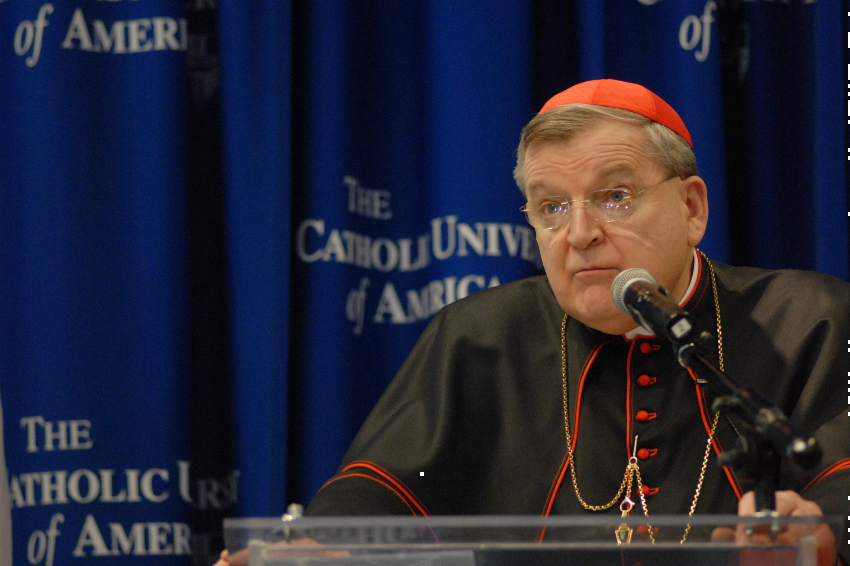
A quick note on an important matter: the London Times is reporting that Pope Leo has granted the request of American Cardinal Raymond Leo Burke to celebrate Mass in St. Peter’s Basilica in October according to the old Latin rite.
Many have been watching to see how Pope Leo acts with regard to the old liturgy.
“This is the first concrete indication of the attitude of Pope Leo XIV to the traditional mass and we are ecstatic to be welcomed into the most prestigious church in the world,” said Joseph Shaw, who heads FIUV (International Federation Una Voce), an association that promotes the Latin mass.
The old Mass was revised under Pope Paul VI in the 1960s. Many argue that it was “the fruit of Vatican II,” but there are also many who argue that the committee to create the revised liturgy went beyond what Vatican II had called for.
Even Pope Benedict XVI, who was present in Rome during the Council (1962-1965) spent much of his life attempting to explain how the old liturgy still had profound value. (I spoke with him several times on this matter.)
In 2007, Pope Benedict wrote Summorum Pontificum, a document that permitted the old Mass to be celebrated by every priest in the world, if the priest wished to do so.
Yet, Pope Francis, arguing that the old Mass was becoming a “source of division” in the church, in 2021 sharply restricted this permission that Benedict had granted 14 years earlier.
Now, four years later, under Pope Leo, Catholics are wondering how Pope Leo will address this liturgical question.
This permission granted Cardinal Burke seems to indicate some willingness on Leo’s part to “rehabilitate” the old Mass.
The Mass is, essentially, a sacred ritual dating back the Jesus Himself, a ritual which, in words and actions, recalls the Last Supper, which occurred on the night before Jesus’ crucifixion, in about 30 A.D. — a supper which was itself a recollection of the ancient Jewish Passover and subsequent the Exodus from slavery in Egypt, which was celebrated once a year as the most solemn ritual by all Jews.
Thus, the Mass brings Jesus Christ ontologically, that is, truly, in actual fact, present among His followers, at the consecration of the bread and wine.
Thus, every Mass is about His presence.
And so, the Mass brings Christ’s body and blood, soul and divinity, truly into our world, at every valid liturgy, celebrated in every church and chapel in every corner of the earth, and has done so since the first days of the Church.
—RM
Pope Leo opens door to Latin mass and Opus Dei in bid to heal rifts (link)
The invitation marks a significant shift in his efforts to bridge divides between traditionalists and liberals after Pope Francis
The Pope has invited an opponent of his predecessor to celebrate Mass in St Peter’s Basilica next month as he tries to repair rifts in the Catholic Church.
Cardinal Raymond Burke, an American, will preside over the traditional Latin mass, which Pope Francis restricted in the belief it was a magnet for traditionalist Catholics who opposed his liberal stance on gay people, divorcees and migrants.
“This is the first concrete indication of the attitude of Pope Leo XIV to the traditional mass and we are ecstatic to be welcomed into the most prestigious church in the world,” said Joseph Shaw, who heads FIUV (International Federation Una Voce), an association that promotes the Latin mass.
Burke, 77, has championed the Mass during which the priest speaks in Latin and faces the altar. It was largely replaced in the 1960s, after the Second Vatican Council, by the vernacular mass in which the priest faces the congregation. The Latin Mass has remained a favourite of traditionalists and became a rallying cry for opponents of Francis after he restricted its use in 2021 and banned it from St Peter’s. He removed Burke from two key Vatican posts and criticised his anti-vaccine views.
Leo has taken steps since his election in May to bring liberals and conservatives together, including giving Burke an audience at the Vatican last month. Massimo Faggioli, a theologian at the Loyola Institute at Trinity College, Dublin, said: “This looks like a policy reversal by Leo and it will be much more complicated now to make the case for not celebrating the Latin mass in dioceses.”
Shaw said: “It has been brutal but now I am confident that things like the crazy ban on advertising Latin masses in parish newsletters will be abolished or not enforced.” Adherents of the Latin Mass are a small minority in the Catholic Church but tend to attend Mass every week, Shaw said. In the US, about 600 churches celebrate the Mass.
Leo has also given an audience to a campaigner for the inclusion of gay Catholics in the Church, indicating he wants to mediate between the liberal and conservative wings of the Church. His efforts to reconcile with conservative Catholics have, however, caused controversy in Spain.
Francis had stripped Opus Dei, the Catholic organisation that includes lay and clerical members, of the management of its shrine in Torreciudad, which generates more than €1 million a year. A local bishop, Ángel Pérez, who opposed Opus Dei, has failed to secure an audience with Leo while the new pope has received Fernando Ocáriz, leader of Opus Dei, El Pais reported.
On Monday Pérez threatened to resign if he is forced to accept a deal presented by a Vatican mediator that the bishop claims favours Opus Dei.