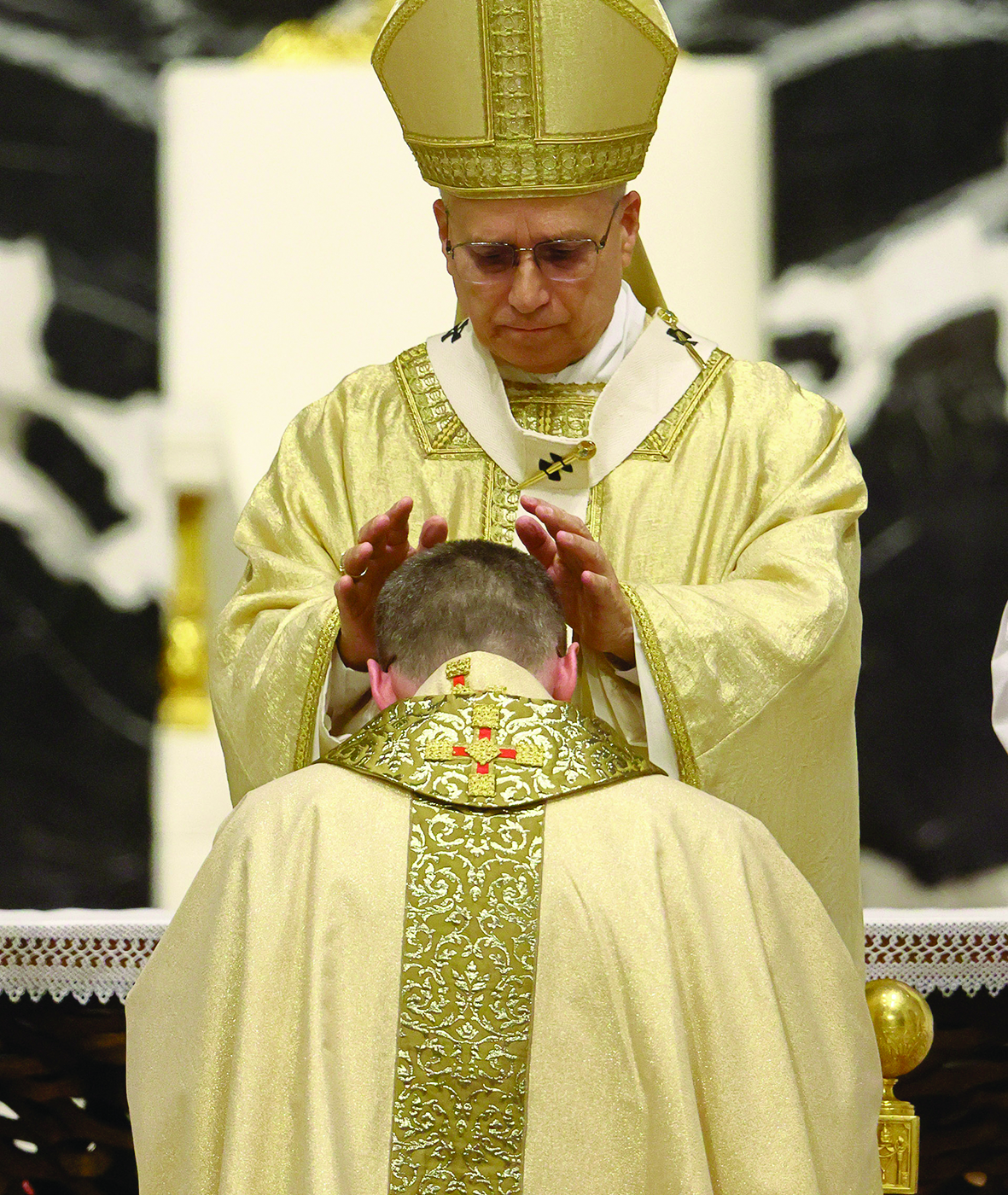
Text by ITV staff/CNA

Cardinals pray May 6 before the 11th General Congregation to discuss the needs of the Church (Vatican Media photo)
The 2025 conclave which elected Pope Leo XIV was the largest papal conclave in history.
Once the sede vacante (empty chair) was declared by Cardinal Kevin Farrell, the Vatican Camerlengo (Chamberlain) upon the death of Pope Francis on April 21, events were put into motion as prescribed by the 1996 Apostolic Constitution Universi Dominici Gregis, produced under the papacy of John Paul II, which outlines norms for the funeral of the deceased Pope and the election of the new Pope.
With 133 cardinal electors gathered in the Sistine Chapel on the first day of the conclave which voted for the new Pope, May 7, the unprecedented number surpassed all previous papal conclaves, breaking the previous record of 115 electors in the 2005 and 2013 elections.
It also marks the first time a conclave was held with more than 120 voting cardinals — the limit set by St. John Paul II in Universi Dominici Gregis.
While paragraph 33 of that document capped the number of electors at 120, paragraph 36 of the constitution affirms that any “cardinal of Holy Roman Church who has been created and published before the College of Cardinals thereby has the right to elect the Pope.”
The College of Cardinals had said earlier in the week of the conclave that Pope Francis lawfully dispensed with the numerical limit by exercising his supreme authority as pontiff.
Not only was the conclave the largest, but also the most diverse in nationalities: Europe’s representation was below 40% for the first time ever, while nations like Sweden, Myanmar, Tonga, Cape Verde and South Sudan were represented in the conclave, also for the first time.
A “stacked deck”?

FARRELL & 2 CARDINALS x
Cardinal Kevin Farrell (c), the Vatican’s Camerlengo, who oversaw the proceedings during the sede vacante, speaks with two other cardinals

RADCLIFFE AND CZERNY x
English Cardinal Timothy Radcliffe, OP, and Canadian Cardinal Michael Czerny during the General Congregations at the Vatican
It was no secret that among those who did not favor the “reform” programs and policies of Pope Francis, there was concern that the “deck was stacked” by Pope Francis’ own cardinalate appointments throughout his pontificate — a whopping 109 of the potential 135 cardinal electors (two pled infirmity and did not travel to Rome for the conclave).
An analysis by Solène Tadié in the National Catholic Register the week before the conclave split the voting cardinals among three “core blocs.”
She said, “The reformist or ‘pro-Francis’ bloc seeks continuity with the Argentine Pope’s pastoral approach, which is largely focused on mercy, social justice and interreligious dialogue.
“This group is open to reforms on issues such as the inclusion of same-sex couples, access to Communion for divorced-and-remarried couples, and greater involvement of the laity. They also favor greater promotion of ecumenism and dialogue with Islam…They are likely to press for the Church’s greater engagement with modern society.
“The conservative bloc, on the other hand, favors doctrinal clarity and moral consistency over pastoral flexibility,” Tadié continued. “This group regards decentralization and doctrinal evolution with caution, seeing such shifts as a threat to the Church’s unity and historic authority. They will probably advocate a clarification and tidying up of Pope Francis’ various motu proprios, which have been perceived as confusing by part of the institutional Church and the faithful, as Italian Vaticanist Andrea Gagliarducci recently pointed out.
“A final bloc, which could be defined as the institutional stabilizers, focuses on Vatican governance and internal stability. This group seeks to balance tradition and pastoral flexibility without introducing major structural changes…Whether progressive or conservative, [they] are seen as essentially pragmatic and likely to support a pontiff capable of uniting the various factions within the Church and restoring the Vatican’s credibility without introducing disruptive reforms.”
But it is not clear that these “blocs” were actually as well-defined when it came to the actual voting.
Days of discussion

Archbishop Emeritus of Hong Kong, Cardinal Joseph Zen, 93, arrives at the Vatican to take part in the election of the new Pope
How did the voting cardinals hash out their differences and come up with viable candidates for whom they could realistically vote, and did vote, over the course of the four ballots that it took to finally choose a new pontiff?
The College of Cardinals, including those not eligible to vote because of their age (over 80) engage in a many-days-long period of discussion called General Congregations. In these daily meetings, the cardinals cover many topics of importance in the life of the Church in an effort to clarify how a new Pope should best be equipped to address them, and to sound out potential candidates.
The 2025 Congregations lasted 15 days, from April 22 to May 6, the day before the actual conclave began.

Italian Cardinal Matteo Zuppi, 69, President of the Italian Bishops’ Conference and a past special envoy of Pope Francis in international diplomatic efforts, attends Mass with fellow cardinals (Galazka photos)
The Congregations began with the traditional confirmation of the vacancy of the papacy by the Camerlengo, an office designated in Pope John Paul’s 1996 Apostolic Constitution Universi Dominici Gregis. The current Camerlengo, Cardinal Kevin Farrell, named in 2019 by Pope Francis, is an Irish-born prelate who spent the majority of his ecclesial career serving in the United States.
The cardinals are summoned to the General Congregations and take an oath of secrecy regarding the content of their discussions (on pain of excommunication). Cardinals are allowed to give short speeches (called “interventions”) as well as hold open discussions in smaller groups.
The daily Congregations continued until Tuesday morning, May 6, the day before the beginning of the conclave, when 173 Cardinals, including 130 Cardinal electors, participated in the twelfth General Congregation.
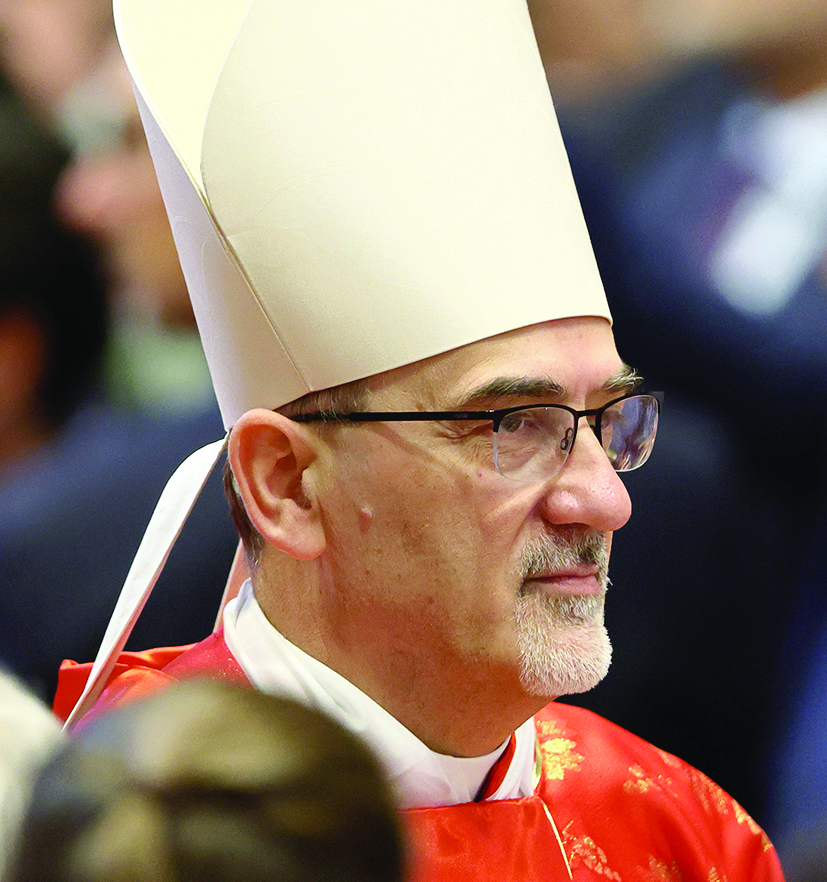
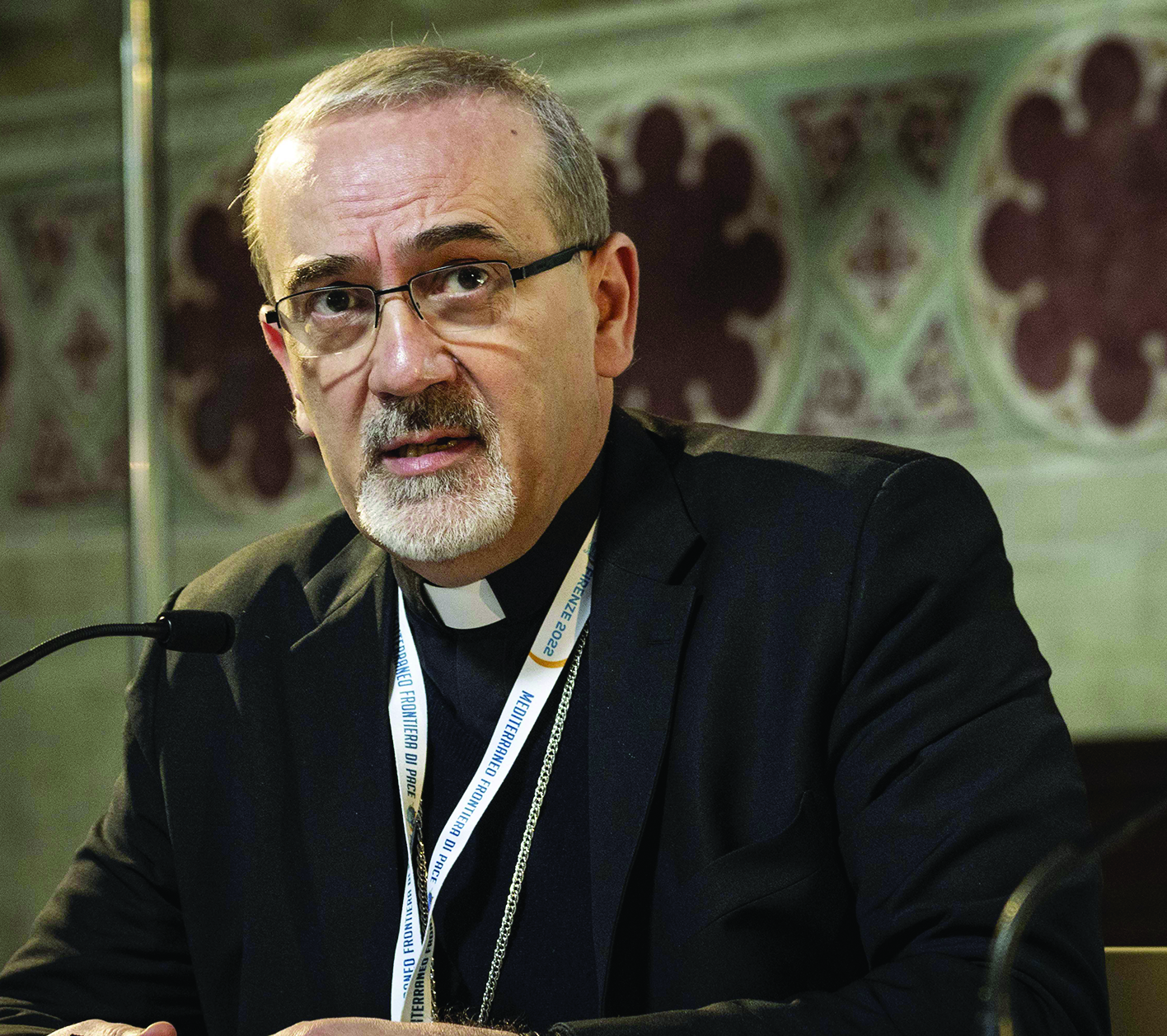
Cardinal Pierbattista Pizzaballa, 60, Latin Patriarch of Jerusalem

TAGLE AT MASS CONCLAVE x
Filipino Cardinal Luis Antonio Tagle, 67

Card Kookuvad genl congregation x
Indian Cardinal George Koovakad, 51, of the Catholic Syro-Malabar Rite Church
A wide range of topics
During a subsequent briefing with journalists, Matteo Bruni, the Director of the Holy See Press Office, explained that, as always, the last Congregation began at 9:00 am with a moment of prayer. There were 26 interventions that day, addressing a wide range of topics.
For instance, discussion focused on the reforms of Pope Francis that need to be carried forward: legislation on abuse, economic issues, the Roman Curia, synodality, work for peace and care for creation.
The theme of communion was emphasized as a calling for the new Pope to be a Pontifex, a builder of bridges, a shepherd, a master of humanity and the face of a “Samaritan Church.”
In times of war, violence, and deep polarization, it was said, there is a need for a Pope of mercy, synodality, and hope.
There was discussion of Canon Law and the power of the Pope, of divisions and the role of cardinals in the Church, of the proximity of the Solemnity of Christ the King and the World Day of the Poor — possibly considered together — and of the need for meetings of the Cardinals during Consistories called by the Pope.
Other topics included Christian initiation and formation as missionary acts, the memory of the witness of martyrs of the faith in areas of conflict and where religious freedom is limited, and the urgent issue of climate change.
The topic of the date of Easter, the Council of Nicaea and ecumenical dialogue was also mentioned.
Bruni also explained that Pope Francis’ Ring of the Fisherman had been made void, and that an appeal was read to the parties involved in various conflicts for a permanent ceasefire and negotiations, calling for a just and lasting peace.
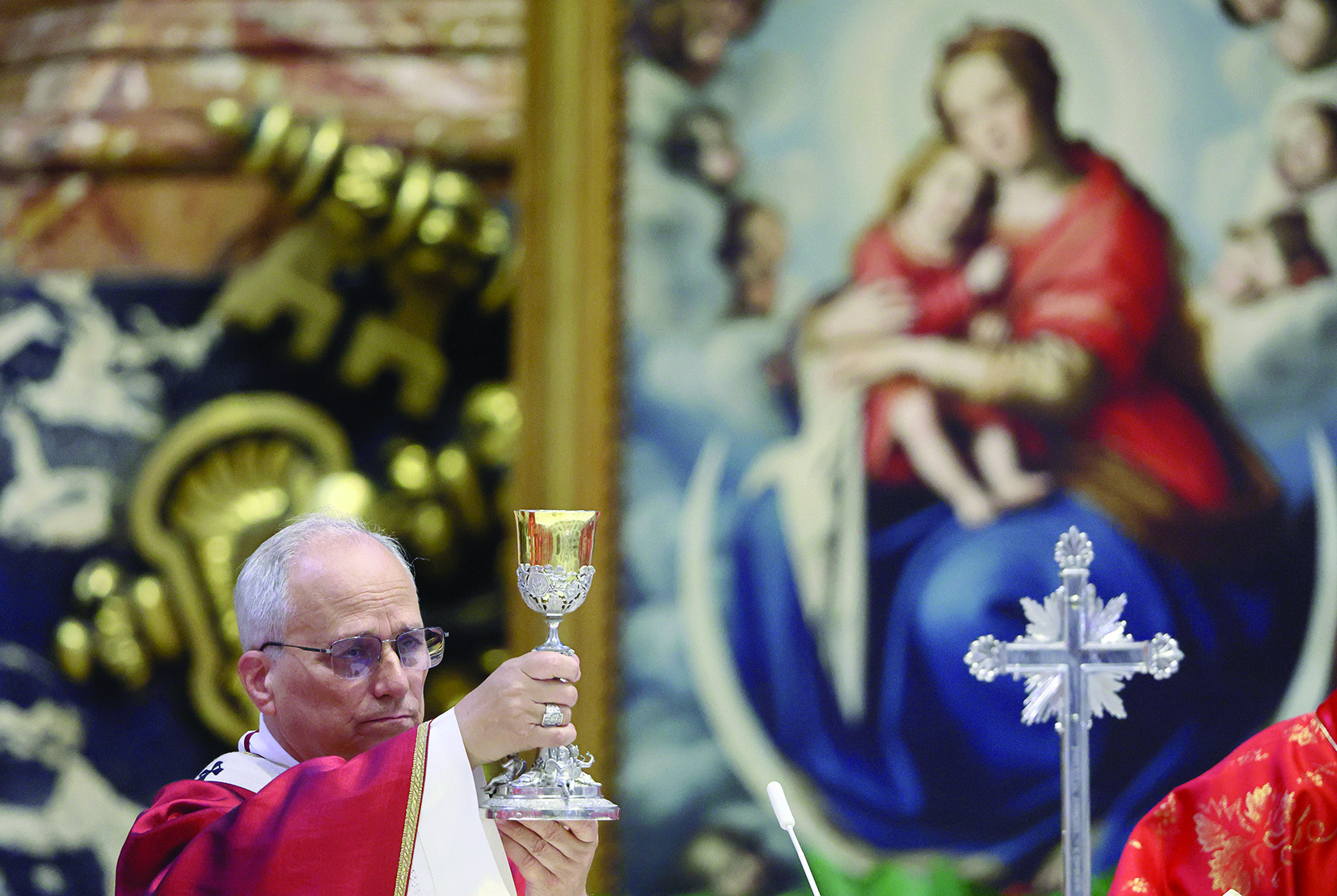
The following morning, May 7 — just hours before the conclave began — the cardinals attended the Pro Eligendo Pontifice (For the Electing of the Pontiff) Mass, the principal celebrant of which was Cardinal Giovanni Battista Re, Dean of the College of Cardinals.
At age 81, Cardinal Re was not eligible to vote in the conclave, but he gave a stirring homily at the Mass which we reproduce on the following pages.

Italian Cardinal Pietro Parolin, 70, Vatican Secretary of State and once thought a leading papal election contender, celebrates Mass during the General Congregations (Galazka photos)