“Bob” Prevost, native Chicagoan and youngest son of parents of mixed Old-world and New-world descent, knew his vocation from youth
By ITV staff

Robert Prevost, left, and his brothers John and Louis pose with their mother in this undated photo. (Courtesy John Prevost)
Pope Leo, the former Cardinal Robert Francis Prevost, Prefect of the influential Dicastery for Bishops, is an American who spent many years as a missionary in Peru before being elected head of the Augustinians for two consecutive terms.
The new Bishop of Rome was born on September 14, 1955, in Chicago, Illinois, to Louis Marius Prevost, a World War II veteran, later educator, of African, Norman, French and Italian descent, and Mildred Martínez, a teacher and librarian of Louisiana Creole descent. He has two brothers, Louis Martín and John Joseph.
Childhood in Chicago

Prevost attended the parish school of St. Mary of the Assumption in nearby Riverdale; he is pictured standing, fourth from left.
Known as “Rob” to his family and “Bob” to friends as an adult, Robert Francis Prevost was raised in Dolton, Illinois, a suburb bordering the far South Side of Chicago. He grew up in the parish of St. Mary of the Assumption in nearby Riverdale, where he went to school, sang in the choir and served as an altar boy. Robert aspired to the priesthood from a young age, and would play-act the Mass at home with his brothers.
Marianna Angarola, 69, a former parochial school classmate, told CBS News that as a second-grade student memorizing the Baltimore Catechism as part of pre-Vatican II First Communion preparation, “Robert Prevost never complained.
“We used to pray with our hands, you know, our fingers pointing to heaven, and, after a while, you get tired of doing that, and you just want to fold them over,” she says. “Robert Prevost never folded his hands over. He was just godly. Not in an in-your-face way. It was part of his aura, like he was hand-selected, and he embraced it. And he wasn’t weird. He was nice,” said Angarola.
Joseph Merigold, another classmate, said the young Robert Prevost also was “the smartest person in the class.
“Back in the day, they used to seat us by our classroom performance, so he always sat in the No. 1 seat, which was in the first row in the back,” says Merigold, 70, who says he was often No. 2 or 3. “He was kind of a little trickster, too. Used to poke me in the back of the head with a pencil all the time because I was a kidder. So he definitely had a sense of humor that a lot of people wouldn’t know because he wasn’t really that outgoing.”
Teenager and Young adult
From 1969 to 1973, Prevost attended St. Augustine Seminary High School, a minor seminary near Saugatuck, Michigan; his brother John recalled how, from the end of eighth grade on, and especially after joining the Order of Saint Augustine, until their later adulthood when leave allowed them to reconnect, Prevost was hardly at home or with their family. At the Augustinian seminary, he earned a letter of commendation for academic excellence, consistently appeared on the honor roll, served as yearbook editor-in-chief, and was secretary of the student council and a member of the National Honor Society. He captained the bowling team and headed the speech and debate team.
Well-liked in high school, Prevost had a reputation for helping other students. Most of his classmates at St. Augustine left the institution. Out of several dozen who entered the school with him, Prevost was one of only 13 students in his class to graduate.
His secondary educational background includes a Bachelor of Science in Mathematics from Villanova University in 1977, a Master of Divinity from Catholic Theological Union in Chicago, and both a licentiate and doctorate in canon law from the Pontifical College of St. Thomas Aquinas in Rome. His doctoral thesis was on “The role of the local prior in the Order of Saint Augustine.”
An Augustinian Priest
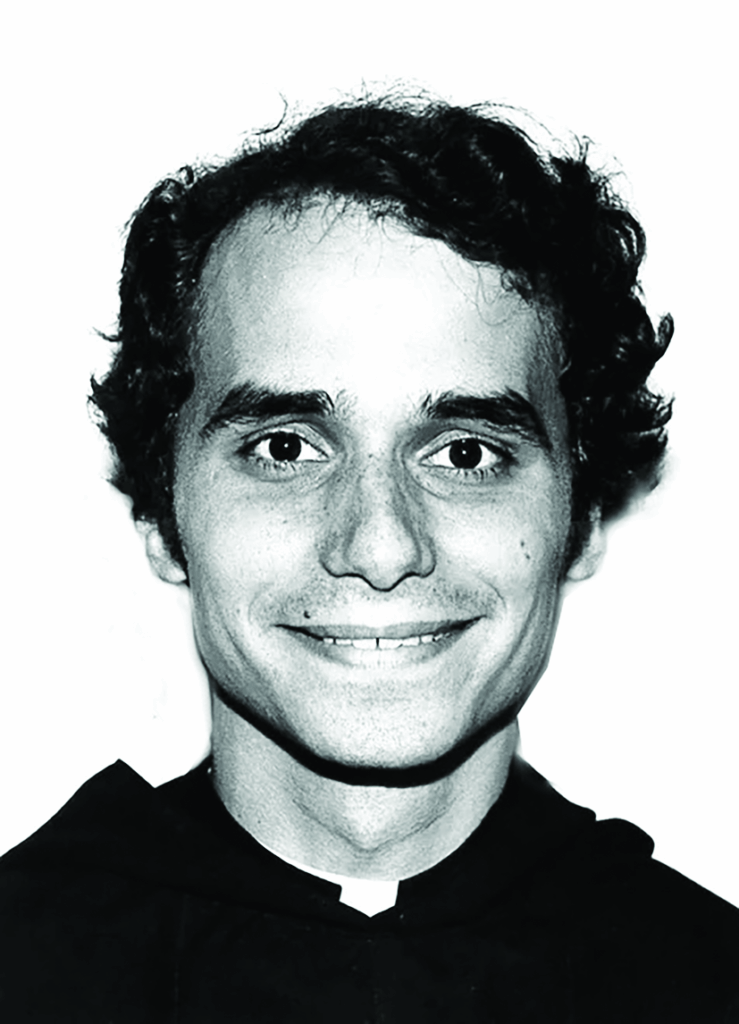
Photo of the young Augustinian Fr. Robert Prevost — the future Pope Leo XIV — who was sent to Peru as a missionary.
After his ordination as a priest in 1982, Prevost joined the Augustinian mission in Peru in 1985 and served as chancellor of the Territorial Prélature of Chulucanas from 1985 to 1986.
He spent the year 1987 to 1988 in the United States as pastor for vocations and director of missions for the Augustinian Province of Chicago before returning to Peru where he spent the next ten years heading the Augustinian seminary in Trujillo and teaching canon law in the diocesan seminary, where he was also prefect of studies.
In 1999, he returned to Chicago and was elected provincial Prior of the “Mother of Good Counsel” province in the archdiocese. Two and a half years later he was elected Prior General of the Augustinians and served two terms until 2013.
A missionary bishop in an unstable Peru
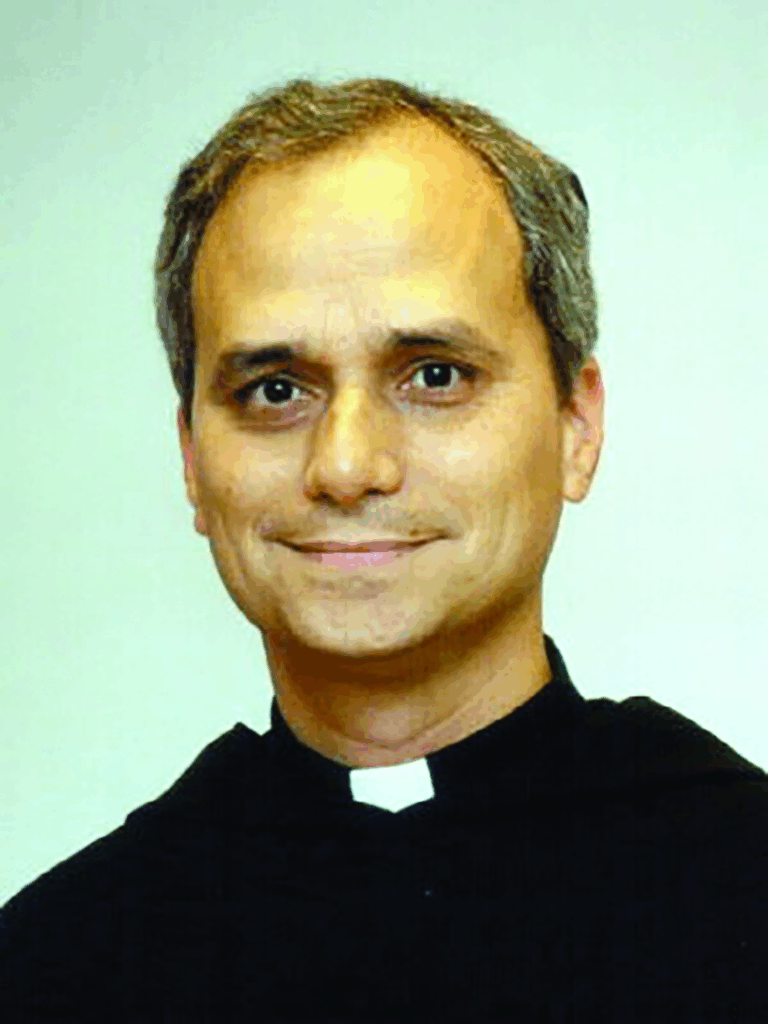
Bishop Robert Prevost at the time of his appointment to the Diocese of Chiclayo, Peru in 2014
Initially apostolic administrator of the Diocese of Chiclayo, he became its full bishop in September 2015. According to the 2022 edition of the Pontifical Yearbook, this diocese in northern Peru has 90 incardinated priests serving a total population of 1.3 million, 83% of whom are Catholics. Prevost was also Apostolic Administrator of the Diocese of Callao, the major Pacific port, from 2020 to 2021.
Within the Peruvian Bishops’ Conference, Archbishop Prevost was vice-president and member of the permanent council from 2018 to 2023, and president of the commission for education and culture from 2019 to 2023.
Peru’s bishops played an important role in ensuring institutional stability during the successive political crises that led to the overthrows of presidents Pedro Pablo Kuczynski in 2018, Martín Vizcarra and Manuel Merino in 2020, and Pedro Castillo in 2022. A few days before his fall and arrest, Castillo, a radical leftist, was received by the president of the bishops’ conference and by Bishop Prevost. They hoped to find a peaceful solution “at this very difficult moment in Peruvian democratic life,” as the bishops, who had previously had difficult relations with his administration, pointed out.
Peru, a relatively small country on the scale of Latin America but nonetheless twice the size of France, was visited by Pope Francis in January 2018. That trip therefore enabled him to meet and spot Bishop Prevost, whom he received in a private audience in 2021.

Robert Francis Prevost as Bishop of Chiclayo in Perù, where he had served as a missionary for many years.
Cardinal and Curial Official
Pope Francis appointed Prevost Prefect of the Dicastery for Bishops in January 2023, a powerful position responsible for selecting bishops. On September 30, 2023, Pope Francis elevated Prevost to the rank of cardinal.
During his first months as prefect, then-Archbishop Prevost continued to remain characteristically discreet in the media, but was reportedly appreciated for his ability to listen and his mastery of issues. Aleteia reported that a French bishop who met him two months after he took office praised his “judicious questions” and his ability to synthesize, stressing his “good impression” of Prevost.
Pope Leo is reportedly very close to his predecessor’s vision regarding the environment, outreach to the poor and migrants, and meeting people where they are. He said last year “the bishop is not supposed to be a little prince sitting in his kingdom.” As cardinal, he appeared somewhat less interested in showing favor toward the LGBTQ lobby than Francis, but he showed some mild support for Fiducia Supplicans.
Prevost has faced some controversy regarding clergy sexual abuse although he he has been staunchly defended in both instances as prompt, compassionate and fair in following mandated procedures. His supporters say the cases have been inaccurately and unfairly reported in the media.
Even as a priest, bishop and cardinal, the newly elected Pope Leo has remained close to his family; his older brother Louis was accustomed to speaking to him every day on the phone.
Of his deeply-felt religious vocation, which eventually led to the papacy, Leo’s brother John told CNN, “He knew at such a young age that this is what he wanted. No one was going to talk him out of it.”
(Parts of this report appeared originally on the website collegeofcardinalsreport.com)