Group aims to support converts’ Jewish identity while practicing orthodox Catholicism
By Madalaine Elhabbal (CNA)

The statue of Ecclesia and Synagoga of the Saint Joseph’s University in Philadelphia to honour the declaration Nostra Aetate, promulgated on October 28, 1965 by the Second Vatican Council
A group dedicated to providing a welcoming space for Jew-ish converts to Catholicism recently launched in Israel.
The Association of Hebrew Catholics celebrated its official launch with a Mass on August 8, the eve of the feast of its patron, St. Edith Stein, who was a Jewish convert to Catholicism.
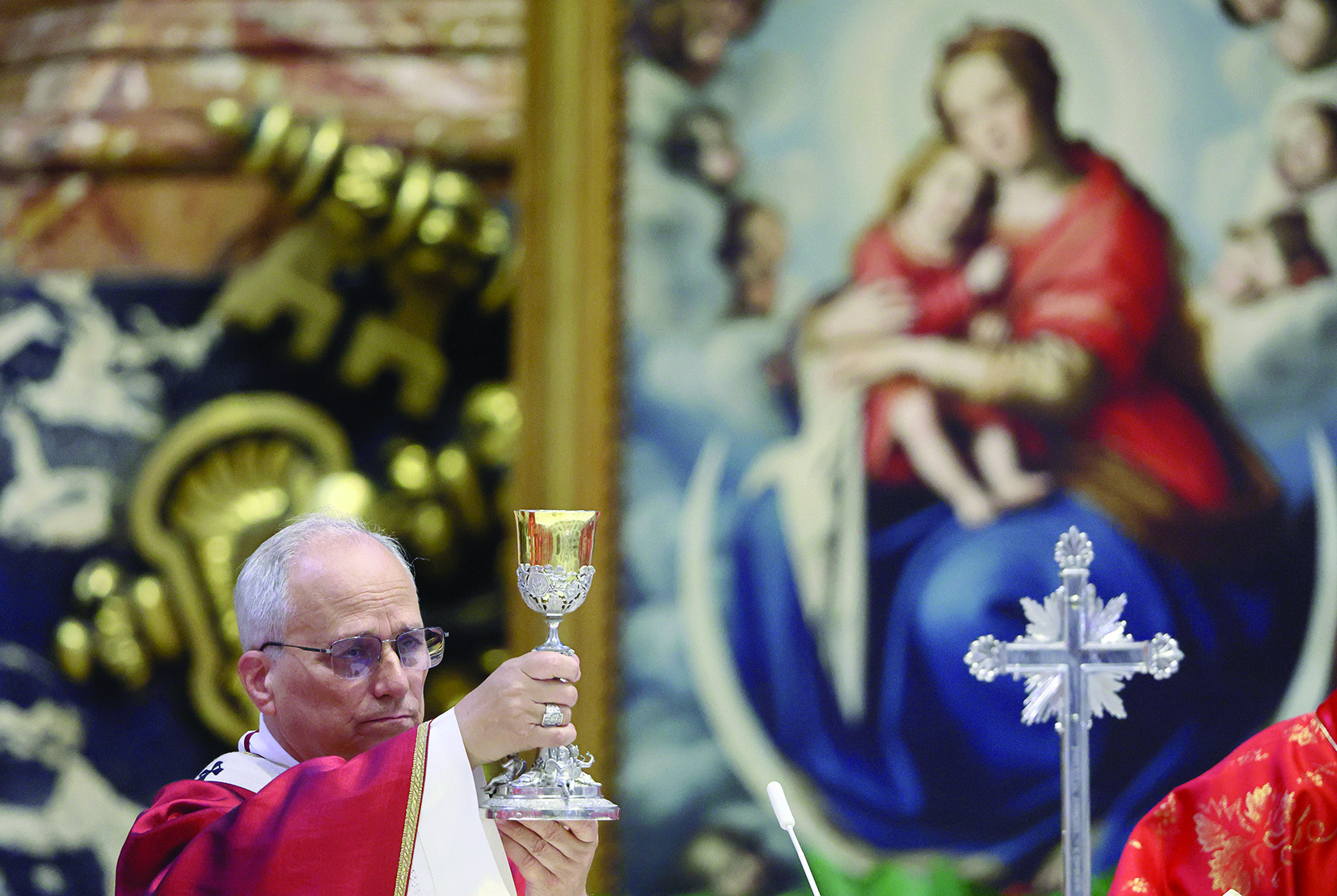
The Syriac Catholic Exarch of Jerusalem, Bishop Yacoub Ephrem Semaan, acted as host for the event and celebrated the Mass, which took place at St. Thomas Syriac Catholic Church in Jerusalem.
Yarden Zelivansky, a Jewish convert to Catholicism and member of the Israel Defense Forces (IDF), who worked to bring the Association of Hebrew Catholics to Israel, told CNA that about 30 people attended the event.
“Here in Israel, we’ve chosen as the local patron St. Angelus of Jerusalem, who was a Jewish convert to the faith and grew up in Jerusalem,” Zelivansky said, noting the Carmelite saint’s record of evangelism with the local Jewish community.
The Association of Hebrew Catholics was founded by Carmelite priest Father Elias Friedman, OCD, a Jewish convert who lived at Stella Maris Monastery on Mount Carmel in Haifa, Israel.
The group plans to host events like the celebration of St. Angelus’ feast day as well as observing some of the major Jewish holidays. “A lot of us see within the Jewish liturgy and within the Jewish holidays, since they are originally from the Old Testament, very, very strong Christological elements,” the Tel Aviv native continued. “So we plan to celebrate all these holidays in a modified way, which brings out Christ that’s already in them, as we see it.”
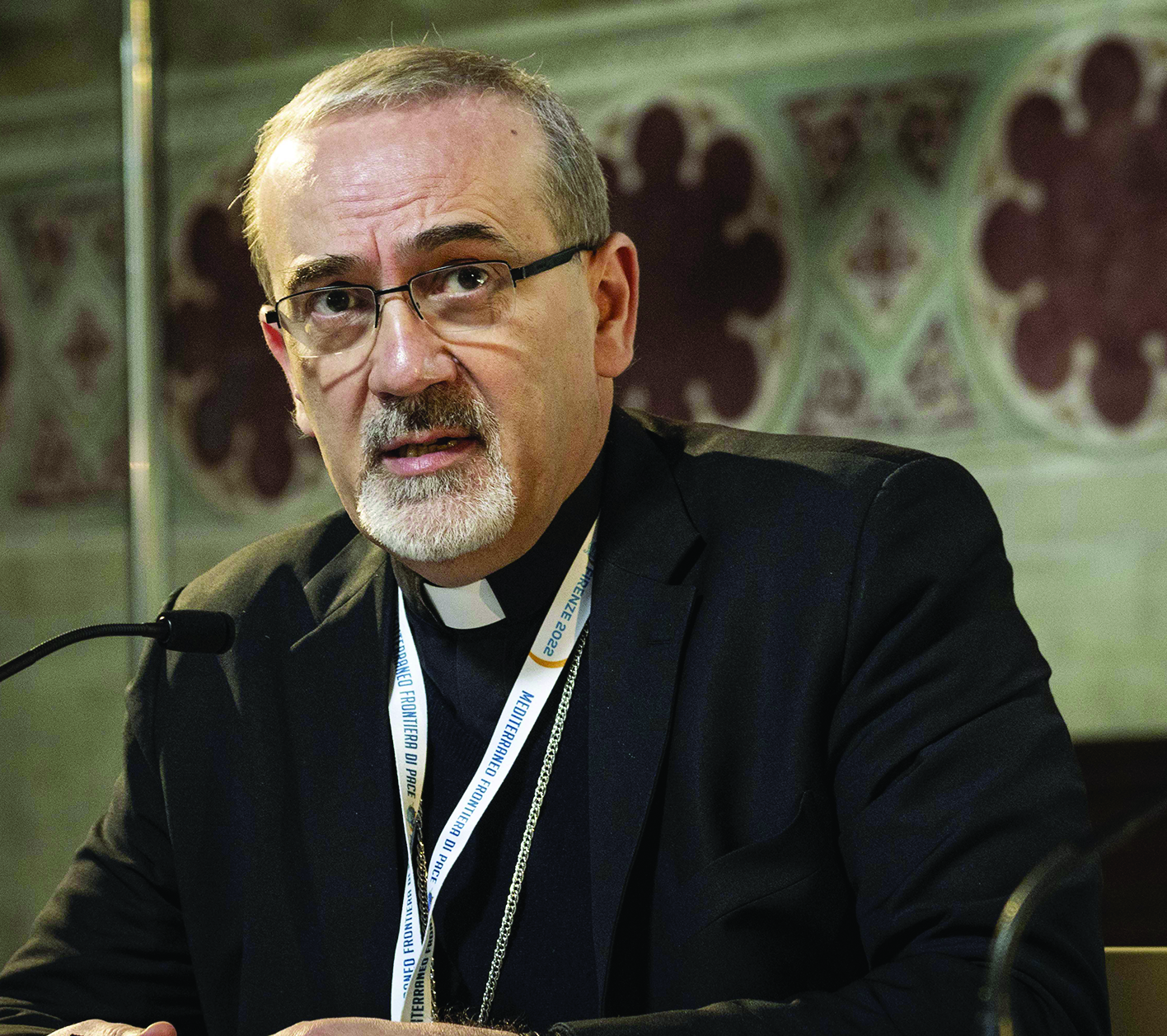
Zelivansky also met with the Latin Patriarch of Jerusalem, Cardinal Pierbattista Pizzaballa, OFM, and other heads of smaller faith communities within the Catholic Church, whom he said “have all been very excited to see where this is going.”
Since most of the group is canonically Latin, Zelivansky said he wanted to have the patriarch’s approval. “I don’t think I’ve ever met anybody who was not himself of a Jewish background who understood this issue so well,” Zelivansky said of Pizzaballa.
Reception in Israel
Reactions to the Association of Hebrew Catholics will likely be “mixed,” according to Zelivansky.
For example, he said, while secular Jews will likely remain indifferent, the religious Jewish community might take issue with the group, not because they are Christian but because they are Jewish converts. However, he noted the association’s goal is not to evangelize per se, but rather to reach people already converts.
“I think what a lot of people don’t appreciate, Jews have historically often rejected Christianity, not just for the theology but for the culture,” he explained. “Because for Jews, their heritage and their culture are not just an ethnic thing.”
Jews have often “rejected Christianity because they were forced to assimilate or they were expected to assimilate when that happens,” he continued. “And it’s unimaginable for them to stop being Jews because it’s their inheritance from God.”
“I think being able to maintain that inheritance while being orthodoxly Catholic, once the Church really knows how to facilitate that for the people of Israel, it’s going to be a historical moment,” he stated.
Origins
“The idea [for the association] is that every culture that Catholicism, Christianity, was brought to, the faith was inculturated into whatever the culture was,” Zelivansky explained, pointing to the expressions of various rites within the Church, which may be distinguished by their liturgies and musical expression.
However, he said, “for the vast majority of Christian history, Jews who converted were simply not afforded that opportunity for different reasons.” Jewish converts to Catholicism who lived in France, Italy, or Germany “were expected to just assimilate into whatever the local culture was.”
“Eventually, a few converts realized that there’s a need to create this space to see what it would look like if Jews could keep their Jewishness as Catholics,” Zelivansky said. “And that’s what the [association] is about, creating that space where you can bring the Jewish culture into the faith, into the Church, and see what that looks like in practice.”