Church leaders speak up for freedom of Catholic education
The archbishop of Paris spoke out in favor of freedom of Catholic education in France, amid weeks of tensions and protests after the principal of a Catholic school was fired by the state school-supervising body for “breaching secularism.”
The principal of a high school in southern France introduced confessions during school hours and invited a bishop to speak to students, which was seen as an offense to school diversity, even if the school was Catholic.
 In an interview for Radio Notre Dame, the station of the Archdiocese of Paris, Archbishop Laurent Ulrich of Paris said on October 12 that “we must be able to proclaim the Gospel in Catholic schools,” adding, “There are people who want to silence us.”
Catholic schools educate around 17% of pupils in France. Of all the private schools in France, 95% are Catholic. They operate under a 1959 agreement with the French state, according to which they follow the same curriculum as public schools and welcome children of all faiths and backgrounds. The state pays the salaries of the Catholic schools’ teachers, who are inspected by the Ministry of Education. The schools can offer catechism classes, as long as they are not compulsory.
Over the past three years, state control over Catholic schools has tightened, and this relationship has become tense. (UCANews)
Word on Fire to publish Ratzinger’s Collected Works in English
 Bishop Robert Barron’s media company Word on Fire plans to publish in English more than two dozen volumes of the collected works of Joseph Ratzinger from before and during the time he served as Pope Benedict XVI, including titles currently not available except in his native German.
 The project, which will include books and academic articles, will require a small army of translators and editors, under the direction of Tracey Rowland, an Australian theologian and expert on the late Pope’s thought, who won the Ratzinger Prize for theology in 2020 [see page 31 in this issue for a profile of Tracey Rowland, one of our Top Ten of 2024 -Ed.]. (NCRegister)
Texas bishop: “no need” for Catholics to attend SSPX Mass if they can go elsewhere
 Bishop Michael Olson of Fort Worth, Texas, published a letter October 29 saying Catholics have “no reason” to worship at Society of St. Pius X chapels, after receiving “several inquiries regarding the ecclesial status” of the SSPX.
Olson noted that the SSPX is not in “formal schism” with the Catholic Church, nor is it “in full communion or good standing.”
The bishop said that Catholics who are “able to receive the sacraments at a Catholic church from clerics in good standing” have “no reason to attend and receive sacraments at an SSPX church or chapel.”
The bishop further noted that those looking to worship at a Traditional Latin Mass can attend a parish run by the Priestly Fraternity of Saint Peter, a traditionalist group with a canonically regular status. (CNA)
Pope Francis canonizes 14 new saints, including priests martyred in Syria
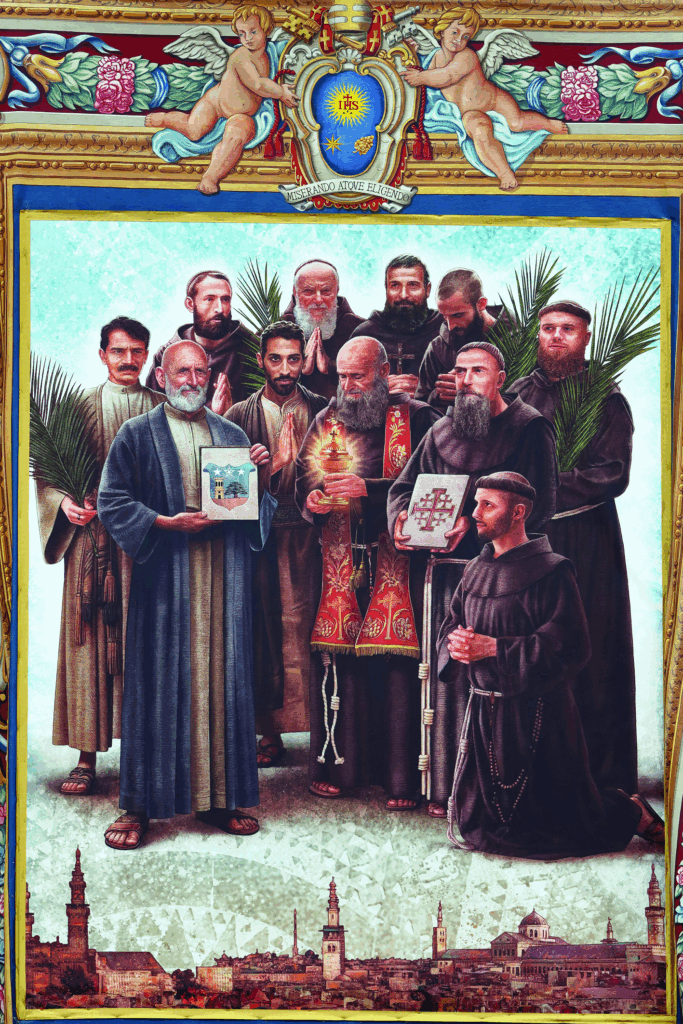
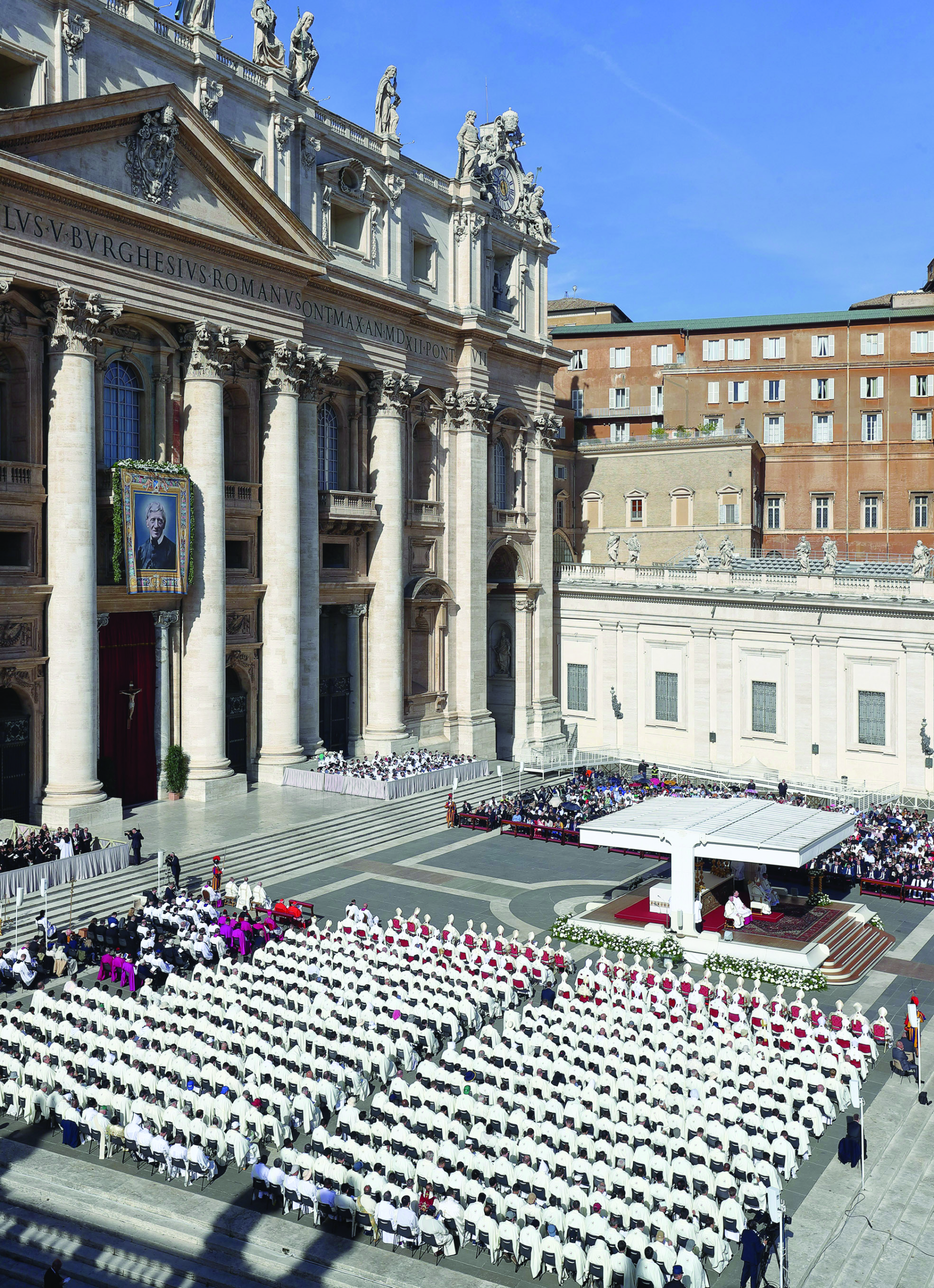
Pope Francis canonized 14 new saints on October 20, including a father of eight and Franciscan friars killed in Syria for refusing to renounce their faith and convert to Islam.
“These new saints lived Jesus’ way: service,” Pope Francis said. “They made themselves servants of their brothers and sisters, creative in doing good, steadfast in difficulties, and generous to the end.”
The newly canonized include Saint Giuseppe Allamano, a diocesan priest from Italy who founded the Consolata missionary orders, and Saint Marie-Léonie Paradis, a Canadian nun from Montreal known for founding an order dedicated to the service of priests.
Also among the saints are Saint Elena Guerra, hailed as an “apostle of the Holy Spirit,” and Saint Manuel Ruiz López and his seven Franciscan companions, all martyred in Damascus in 1860 for refusing to renounce their Christian faith.
The final three canonized are siblings, Saints Francis, Mooti, and Raphael Massabki, lay Maronite Catholics martyred in Syria along with the Franciscans. (CNA)
South Korea: one million people in the streets against homosexual “marriage”
On October 27, more than a million South Koreans — predominantly from the Christian and Catholic communities — took to the streets of Seoul in a large-scale protest against proposed anti-discrimination laws that would legally recognize same-sex marriages. Organized by a coalition of Christian churches and bolstered by the slogan “Healthy Family, Holy Nation,” the event marked one of the country’s largest public demonstrations, drawing attention to a cultural clash between traditional religious beliefs and evolving LGBTQ+ rights.
The proposed anti-discrimination legislation, which activists have pursued since 2011, has faced repeated opposition from conservative and religious groups. Though the bill would protect individuals from discrimination based on gender, age, race, religion, academic background, and sexual orientation, opponents argue it infringes on religious freedoms and could compel religious institutions to contradict their beliefs. Kim Jeong-hee, spokesperson for the organizing committee, condemned the legislation as fundamentally opposed to “the natural law and the order in which the world was created.” According to Kim, the recent court ruling extending benefits to same-sex couples challenges the constitution, which, in her view, does not legally recognize same-sex marriage. (Zenit)
Everyone needs some heavenly help, Pope says


The Pope welcomed officers, soldiers and a large group of volunteers to the Vatican November 7 to celebrate the 70th anniversary of Saint Christopher being named their patron saint by Pope Pius XII.
“I also have a devotion to Saint Christopher,” the Pope told them. “I always have a Saint Christopher medal with me because he helps me keep going.”
Choosing a patron saint, the Pope said, is “to recognize that there is no profession or state in life that does not need to cling to true values and receive divine protection.” (UCANews)
Myanmar rights body key to peace talks, says Catholic member
 Joseph Kung Za Hmung, a newly appointed Catholic member of conflict-stricken Myanmar’s National Human Rights Commission, said the rights body can facilitate dialogue and mediation, Fides, the Vatican’s missionary news agency, reported on October 23.
“The commission can now take on a bridging function and be a body that can help initiate a dialogue and mediation process,” Hmung added.
Hmung is the founder of Yangon’s Saint Joseph University, the country’s first private Catholic university. (UCANews)
Vatican prohibits Traditional Latin Mass in Bishop Strickland’s former cathedral
 Celebration of the Traditional Latin Mass in the cathedral of the Diocese of Tyler, Texas, must cease effective December 1, according to a Vatican-approved order that came almost one year after Pope Francis removed Bishop Joseph Strickland, one of his most outspoken critics, as head of the diocese.
 Bishop Joe S. Vásquez of Austin, apostolic administrator of the Tyler Diocese since Strickland’s dramatic ouster last November 11, announced the move in a letter to parishioners of Tyler’s Cathedral of the Immaculate Conception, which had offered a 2 p.m. Sunday Mass in Latin.
A spokesperson for the diocese also confirmed that Traditional Latin Masses must also be halted in four other parishes. Saint Joseph the Worker Parish, under the care of the Priestly Fraternity of Saint Peter (FSSP), is the only parish in the diocese with authorized “use of the 1952 Missal, according to the provisions of Traditionis Custodes.” (NCRegister)
8 million expected for St. Francis Xavier exposition in Goa
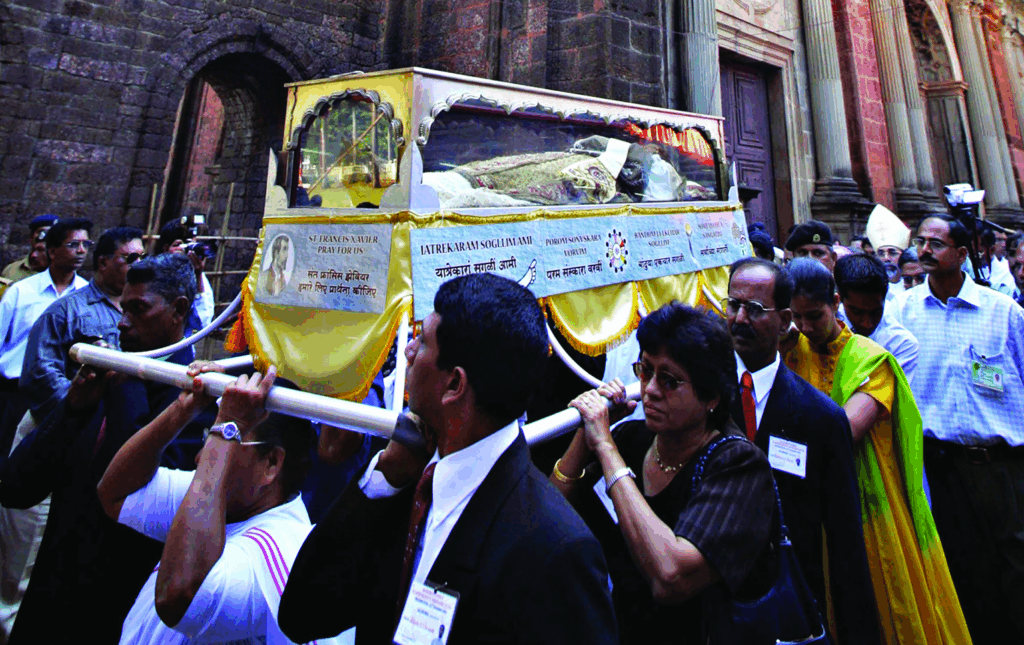
 The final days have arrived at the Basilica of Bom Jesu in Old Goa, India, and nearby areas for receiving an estimated 8 million Catholics for the exposition of the sacred relics of Saint Francis Xavier.
The once-in-ten-year event, which lasts 45 days, began on November 21, when the saint’s relics kept in the silver casket were lowered and taken to the nearby Sé Cathedral de Santa Catarina for the public to venerate.
The expositions first began in 1782, 230 years after the saint died in Japan and after the Archdiocese of Goa claimed control of the body to help people venerate the Jesuit missionary known for his work across Asia.
Francis Xavier was buried on an Island near Japan in 1552, and his body was found incorrupt when exhumed a year later to be taken to Portugal, the base of his mission.
However, the body was not taken to Portugal, as its well-preserved state was considered a sign of sanctity, and it was kept in Goa, then a Portuguese colony and the base of his missionary activities.
The body is not technically considered incorrupt now, as some parts, particularly soft tissues, have decomposed. The relics are now preserved in a lying position, clad in mass vestments. (UCANews)