Holy Year pilgrims will trace paths trodden for centuries
By ITV staff/CNA

Rome’s Santa Croce in Gerusalemme church, founded by St. Helena in the fourth century. (photo: commons.wikimedia.org)
Pilgrimage, travel to a holy place or for a holy purpose, has a long history in the Church. St. Helena, mother of Constantine, established the practice of traveling on pilgrimage in the fourth century when, circa 326 A.D., she herself embarked on a trip to the Holy Land. She was in her late seventies at the time, and had been named the “Augusta” (“the exalted”) by her son two years earlier.
Helena sought to visit the sacred sites associated with the life and Passion of Jesus, knowledge of which had been preserved and handed on by the local Christian community there. Besides identifying and marking sites like the spots where sermons and miracles of Jesus occurred, St. Joseph’s carpentry shop, the cave of the Nativity and the house of the Annunciation, she returned to Rome with sacred relics, including wood pieces, nails and the placard from Christ’s cross.
Helena is said to have initiated the building of one of the seven pilgrim churches in Rome, Santa Croce in Gerusalemme (“Holy Cross in Jerusalem”), on the land of her own imperial palace to house the sacred relics she brought from Jerusalem.
Muslim control became an obstacle to pilgrimage to the Holy Land in the seventh century. Yet Christians were not content to let the tradition of pilgrimage simply die; increasingly, they traveled to sites associated with the Apostles, saints, Christian martyrs, and Marian apparitions. Rome became a common destination for pilgrims from throughout Western Christendom in the medieval period, and important sites were listed in travel guides such as the 12th-century Mirabilia Urbis Romae.
“Marvels of the City of Rome” in English, the Mirabilia Urbis Romae is a grouping of hundreds of manuscripts, incunabula, and books in Latin and modern European languages that describe notable built works and historic monuments in the city of Rome. Starting in the 14th century, a re-elaboration of the Mirabilia dubbed the Historia et descriptio urbis Romae began to appear in combination with the Indulgentiae ecclesiarum urbis Romae focusing on the churches of Rome, and the Stationes ecclesiarum urbis Romae that included a calendar listing Masses at various Roman churches. These assemblages were clearly intended for pilgrims.
What Thomas O’Loughlin, author of the book Celtic Theology, says about pilgrimage in the historic culture of Catholic Ireland is true of Catholic pilgrimage generally: “The actual act of walking was a sanctifying activity; the act of walking in a group, processing, was a liturgical act of the first order.”
Though the relative value of journey and destination may differ for different pilgrims, the process of having to leave one’s home to travel to another—sacred—place is crucial. It is a practice that persists into our own day.
Pope Francis has designated the year 2025 as a Holy Year, also called a Jubilee Year — historically, a time for reconciliation and renewal — and given it the theme “Pilgrims of Hope.” Millions of pilgrims are expected to descend upon the Eternal City for the Church’s many scheduled Holy Year events, and the city has been restoring and building infrastructure for the past two-plus years in order to accommodate them.

Illustration page from a 1499 book of Mirabilia urbis Romae. The first important printed copy was compiled around 1475 under the title Mirabilia Romae velpotius Historia et descriptio urbis Romae.
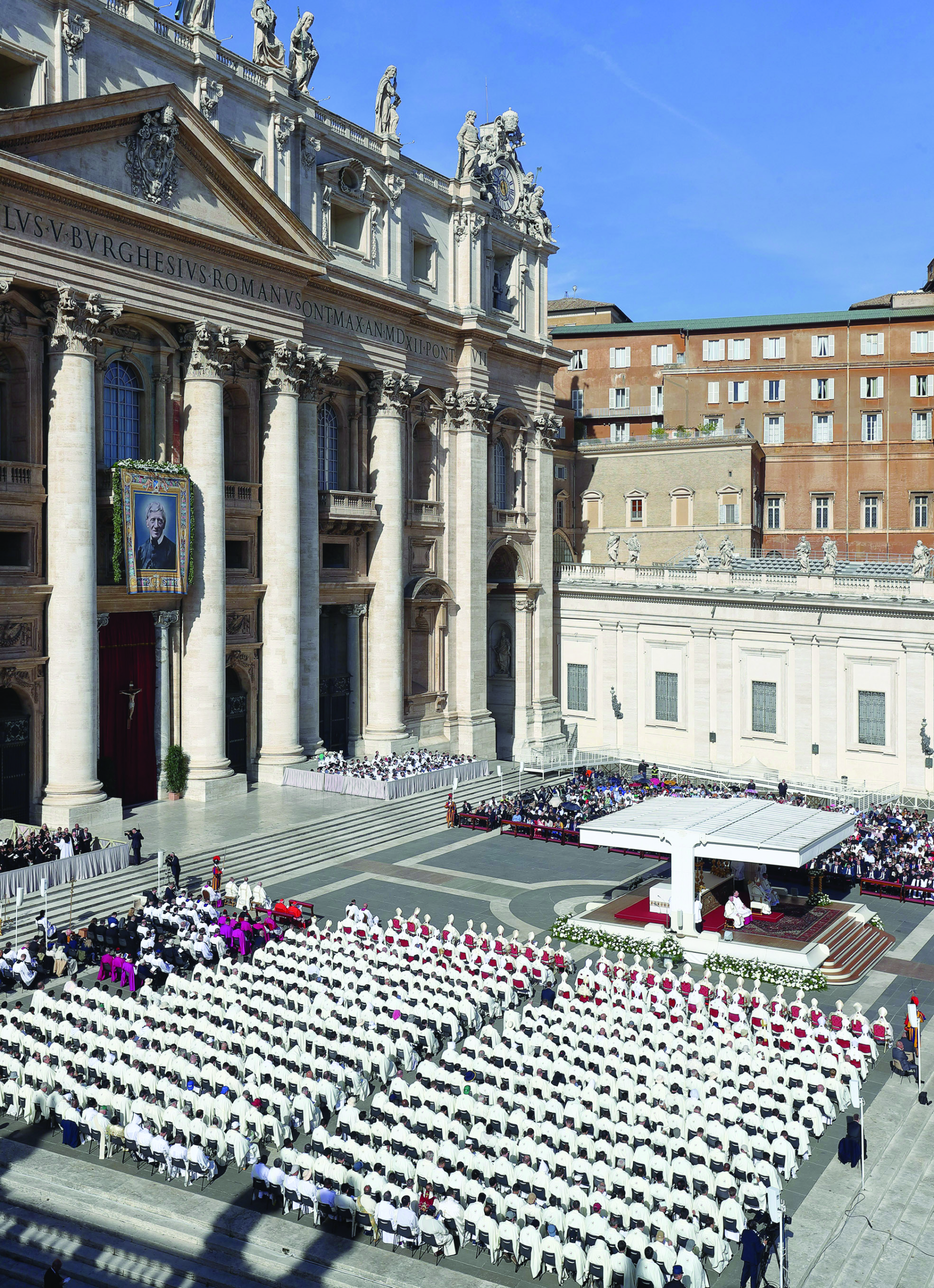
Solemn opening of the Holy Doors

The Itinerarium Burdigalense (“Bordeaux Itinerary”), the oldest surviving Christian itinerarium, was written by the anonymous “Pilgrim of Bordeaux” recounting the stages of a pilgrimage to Jerusalem in the years 333 and 334.
In Pope Francis’ May 9 papal bull Spes non confundit, he announced that the Jubilee Year would begin with the opening of the Holy Door of St Peter’s Basilica on Christmas Eve, 2024.
Later, on December 29, the Pope opened the Holy Door of the Archbasilica of St John Lateran, the Cathedral of Rome. On the same day, every Cathedral and co-Cathedral throughout the world had Mass celebrated by the local Bishop to mark the opening of the Jubilee.
On the Solemnity of Mary the Mother of God, January 1, 2025, Pope Francis opened the Holy Door for the Basilica of St. Mary Major, with the Holy Door for the Basilica of St Paul’s Outside the Walls being opened on Sunday, January 5, the Vigil of the Feast of the Epiphany.
“In the course of the year,” Pope Francis writes, “every effort should be made to enable the People of God to participate fully in its proclamation of hope in God’s grace and in the signs that attest to their efficacy.”
The Jubilee will end in the particular Ch ur ch es throughout the world on December 28, 2025, with the Holy Doors of St. John Lateran, St. Mary Major, and St. Paul’s Outside the Walls being closed on that same date.
And finally, the Jubilee Year will draw to a close in Rome on the Solemnity of Epiphany, January 6, 2026.

Helena as Augusta, 324–328/30, bronze follis.
A Holy Year marked by hope
Pope Francis insisted that Christian hope, rooted in Christ’s death and resurrection for each human person, points to our final destiny — eternal happiness with God in heaven. We are saved by God’s mercy, seen especially in the gift of indulgences: while Confession washes away our sins, indulgences – including the Jubilee Indulgence – remove the temporal effects of sins forgiven in the Sacrament.
Some ways to receive an indulgence during the 2025 Jubilee Year, along with the usual conditions, include:
- Visiting a Major Papal Basilica in Rome
- Visiting a basilica in the Holy Land
- Visiting a cathedral or other sacred place designated by the local Ordinary
- Fasting from social media, futile distractions, or superfluous consumption
- Volunteering in service to the community
- Performing works of mercy
- Supporting works of a religious or social nature.
The Holy Father concludes the Bull with a final note of hope, praying that “the coming Jubilee will be a Holy Year marked by the hope that does not fade, our hope in God” and that it might help us recover “the confident trust we require in the Church and in society, in our interpersonal relationships, in international relations, and in our task of promoting the dignity of all persons and respect for God’s gift of creation.”
Spes non confundit ends with Pope Francis exclaiming, “Let us even now be drawn to this hope!” He calls on Christians to live a life in keeping with their faith, as a witness and an invitation to all to “hope in the Lord.”
“May the power of hope fill our days,” the Pope says, “as we await with confidence the coming of the Lord Jesus Christ, to whom be praise and glory, now and forever.”