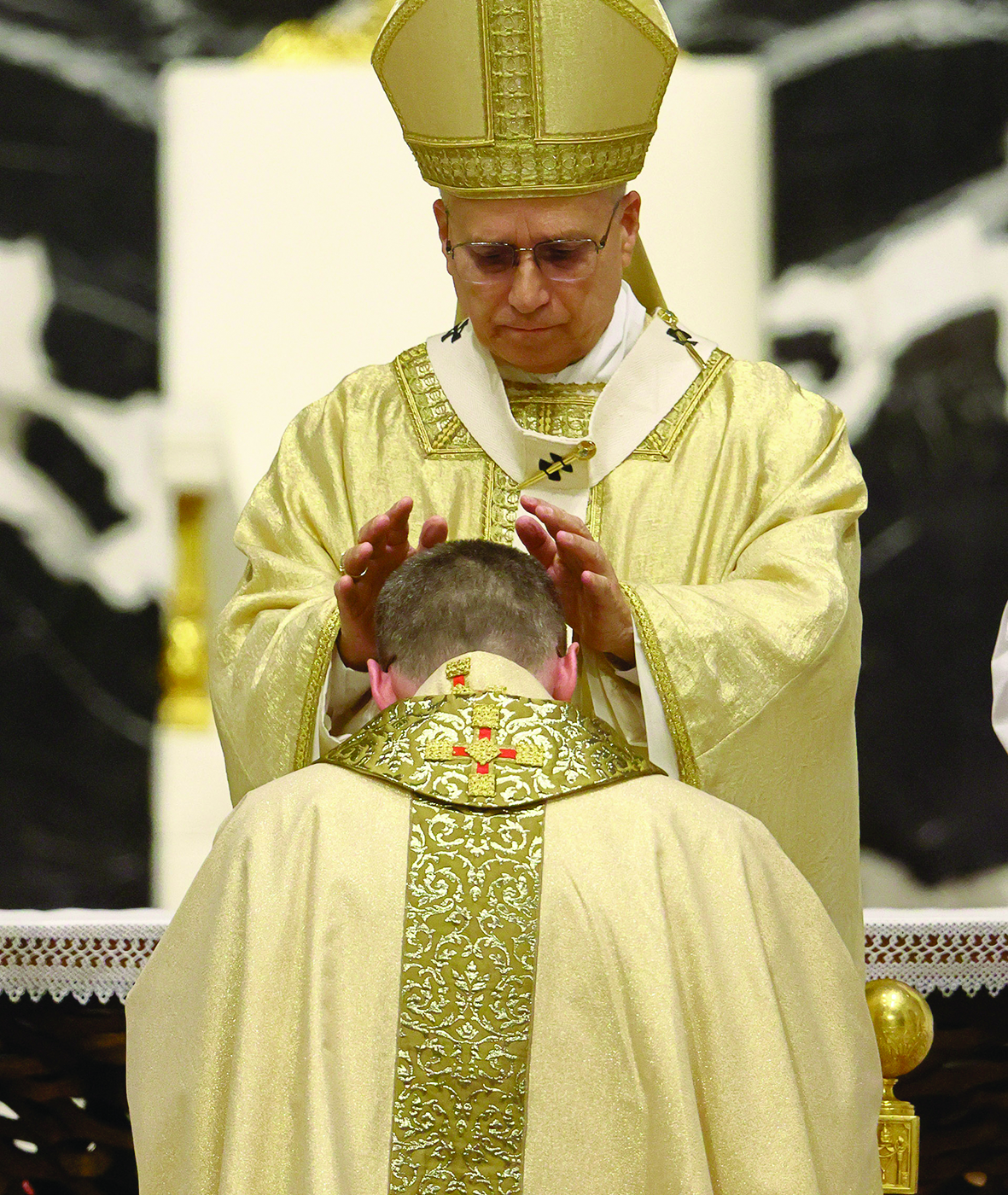
Dilexi Te—I have Loved You—says Leo, is a continuation of Dilexit Nos, Francis’ encyclical on the heart of Christ
By Anna Artymiak
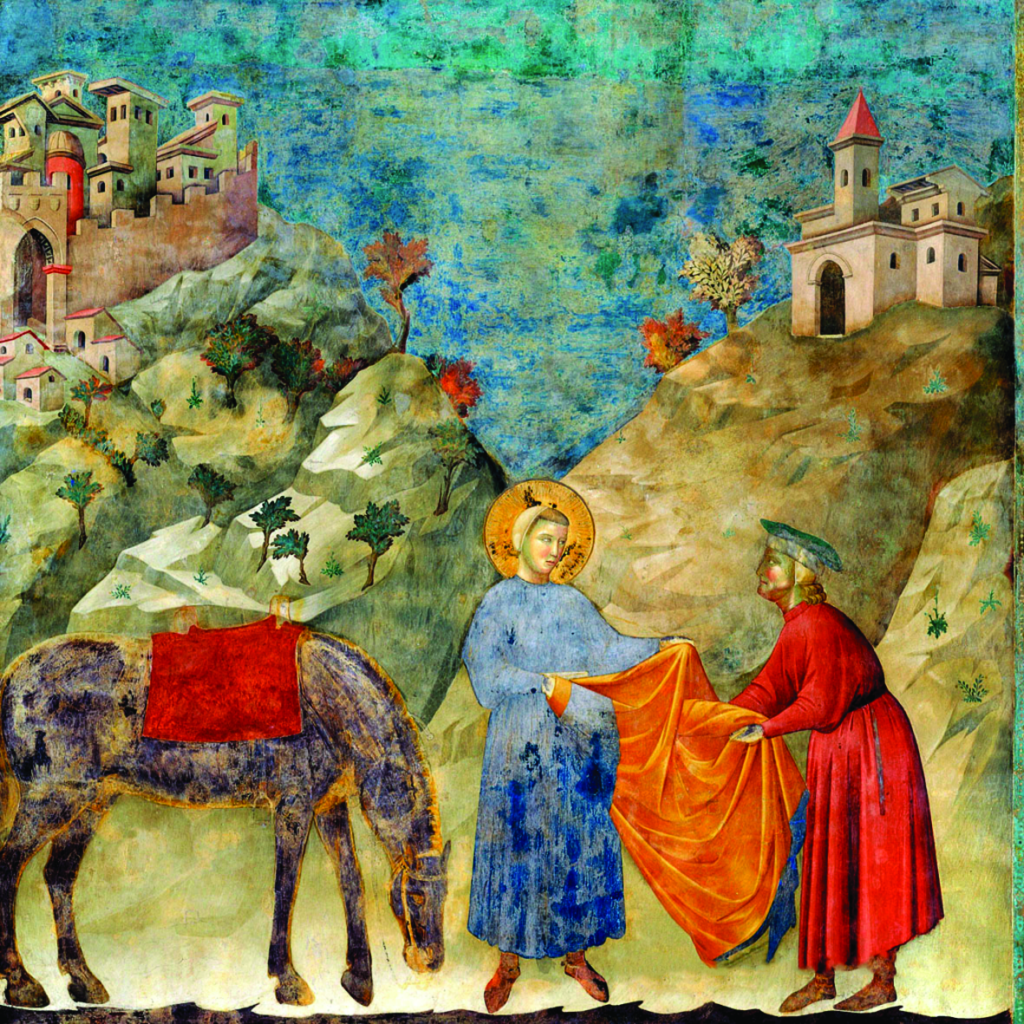
Giotto, “The Gift of the Cloak,” Basilica of Saint Francis in Assisi.
The end of September and the beginning of October marked two long-awaited acts of Leo XIV: on September 26, the appointment of the new prefect of the Dicastery for Bishops, and on October 9, publication of his first teaching document.
It took almost 5 months for our new Pope to choose his own successor at one of the most important dicasteries of the Roman Curia, the Dicastery for Bishops. He entrusted it to the discreet, hard-working and pious Italian Archbishop Filippo Iannone, O. Carm., a canon lawyer and until now prefect of the Vatican Dicastery for Legislative Texts, and known for resolving many complicated issues. It is significant that Leo XIV is repeatedly appointing for important offices people with formation in canon law.
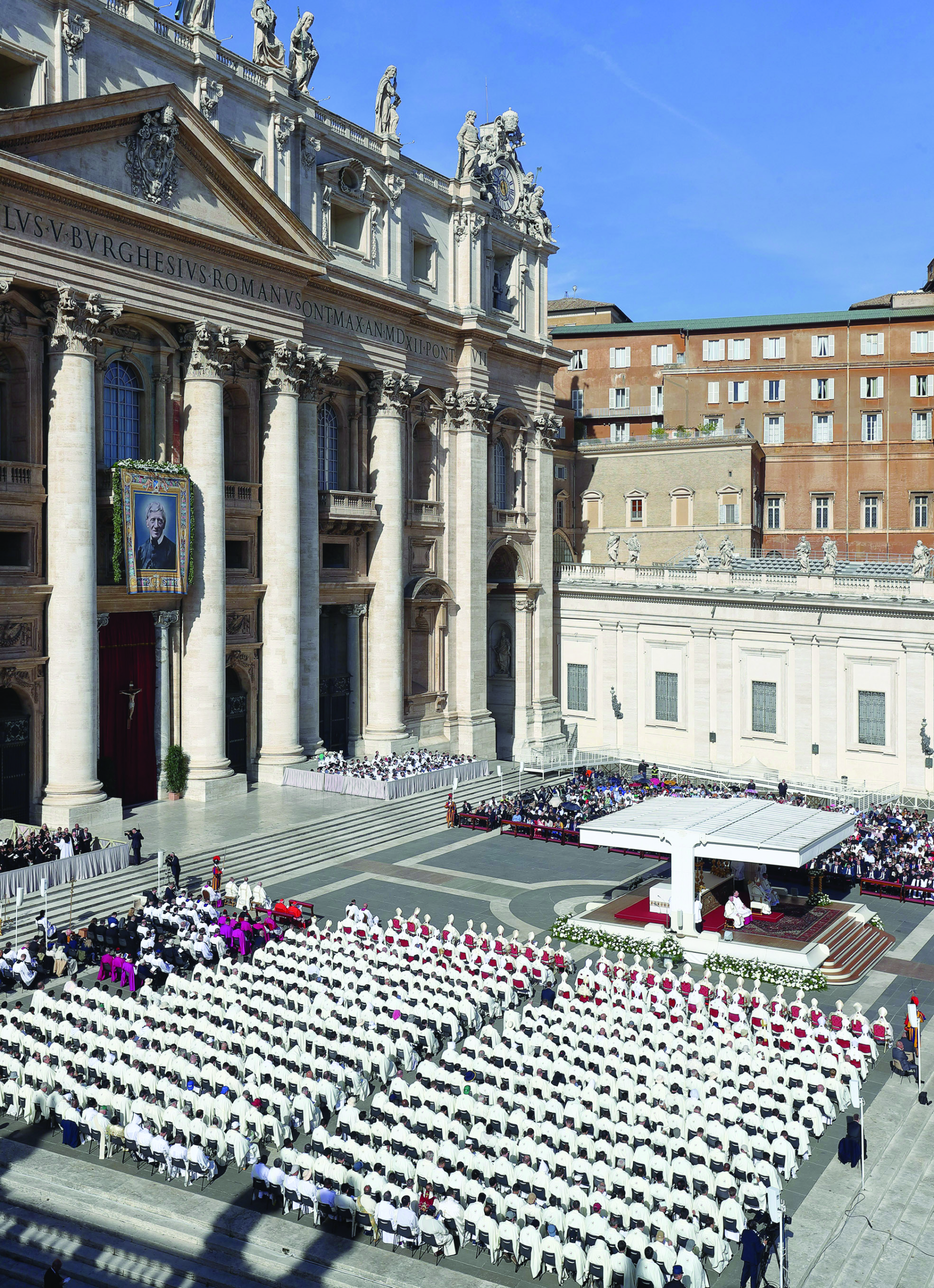
Leo’s first teaching document, an apostolic exhortation on love for the poor, Dilexi Te was released by the Vatican in the context of the Jubilee of the Consecrated Life. After the Holy Mass for religious men and women from around the world, at which the Pope presided in St. Peter’s Square, there was a press conference at which the exhortation was presented at the Holy See Press Office. The text was kept very secret. The Vatican went to a lot of effort to ensure that the text wouldn’t be published by any journalists in advance, as has happened sometimes in the past.
Dilexi Te is a document inherited from the late Pope Francis. As Leo XIV explains in the introduction, “…in continuity with the Encyclical Dilexit Nos, Pope Francis was preparing in the last months of his life an Apostolic Exhortation on the Church’s care for the poor.” The subject of Dilexit Nos was the human and divine love of the heart of Jesus Christ, and this final encyclical of his papacy was seen as his spiritual testament.
“I am happy to make this document my own – adding some reflections – and to issue it at the beginning of my own pontificate, since I share the desire of my beloved predecessor that all Christians come to appreciate the close connection between Christ’s love and his summons to care for the poor. I too consider it essential to insist on this path to holiness,” adds Leo.
An encyclical, rather than an exhortation, was highly expected to be Leo’s first major document, so the Publication of Dilexi Te on love of the poor came as a surprise. However, rumors about the inherited document were circulating for months. Speaking to journalists on October 7 — two days before the presentation of the document — on his return to Rome from Castel Gandolfo, Leo XIV commented on a question about the choice of the poor as the theme of his first exhortation, saying: “Certainly, I think it’s the message of the Gospel. Ultimately, whatever the Pope says or proclaims must always be rooted in the Gospel. That’s what we want to try to do.”
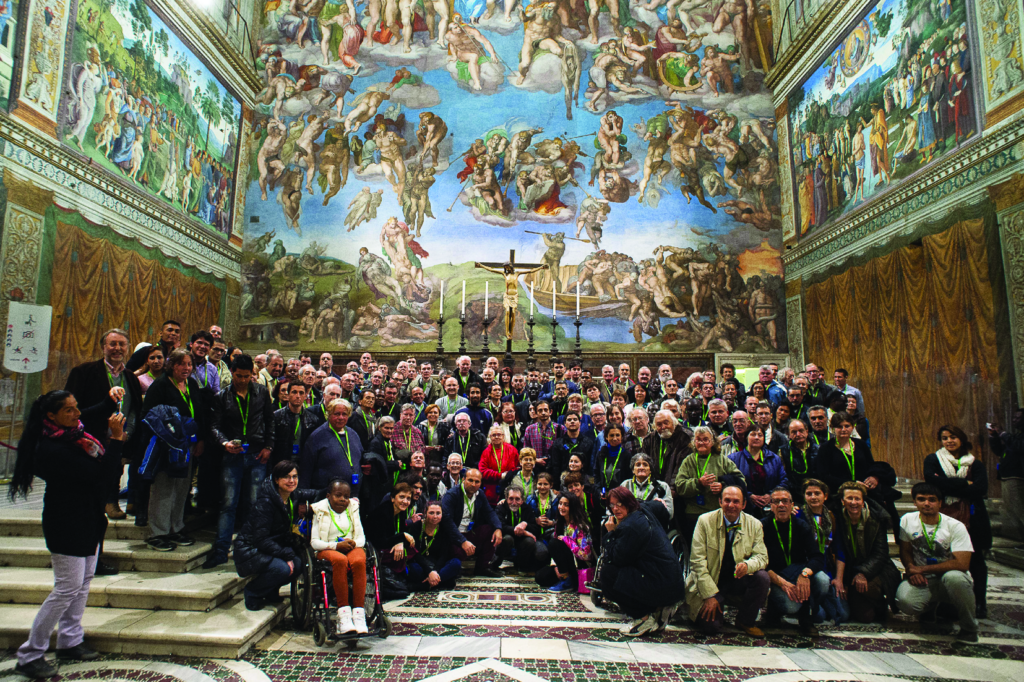
Special visit to the Vatican Museums and the Sistine Chapel for a group of one hundred and fifty homeless people, organized by Cardinal Konrad Krajewski of the Office of Papal Charities.
A similar situation happened in 2013 after the resignation of Benedict XVI. The Pope emeritus personally entrusted the text of his last unfinished encyclical to his successor, Pope Francis. Then the new Pope decided not to change the original text, but only to add his own final chapter. Lumen Fidei therefore passed into history as a “four-handed” encyclical. Leo XIV, however, preferred to make a stronger contribution to the original text. As Canadian Cardinal Michael Czerny, one of two cardinals selected to make the exhortation’s presentation, said to journalists at the press conference, this document is “100% Francis and it’s 100% Leo.”
Pope Leo signed the exhortation last Saturday, October 4, the Feast of St. Francis of Assisi, and sent an accompanying letter to the Episcopal College in which he said “may Dilexi Te help the Church to serve the poor and help bring the poor to Christ.” The tone of the document is not in any way strident, and it is simple and accessible to every reader. Divided into five chapters, it is very Biblically- and theologically-rooted.
In the document, Leo XIV gives a theological definition of an act of mercy so as not to confuse it with philanthropy. The Pope reminds us: “This is not a matter of mere human kindness but a revelation: contact with those who are lowly and powerless is a fundamental way of encountering the Lord of history. In the poor, he continues to speak to us.” And Leo adds that “the preferential choice for the poor is a source of extraordinary renewal both for the Church and for society” — using as an example St. Francis of Assisi.
The church’s preferential choice for the poor expresses God’s preferential love for the poor and his readiness to hear their cry, which we have already learned from the Old Testament. Then, in the New Testament, Jesus “is a manifestation of this privilegium pauperum” who “presented Himself to the world not only as a poor Messiah, but also as the Messiah of and for the poor.” The Pope reminds us of the passage in the Gospel which shows God’s will of mercy towards the poor.
The Holy Father calls poverty “a multifaceted phenomenon.” As “there are many forms of poverty,” next to those “who lack material means of subsistence” and “who are socially marginalized and lack the means to give voice to their dignity and abilities,” there is also “moral and spiritual poverty, cultural poverty, the poverty of those who find themselves in a condition of personal or social weakness or fragility, the poverty of those who have no rights, no space, no freedom.” Next to the old forms of poverty there are “new ones, sometimes more subtle and dangerous.” Here Leo XIV appreciates that “the United Nations has made the eradication of poverty one of its Millennium Goals.”

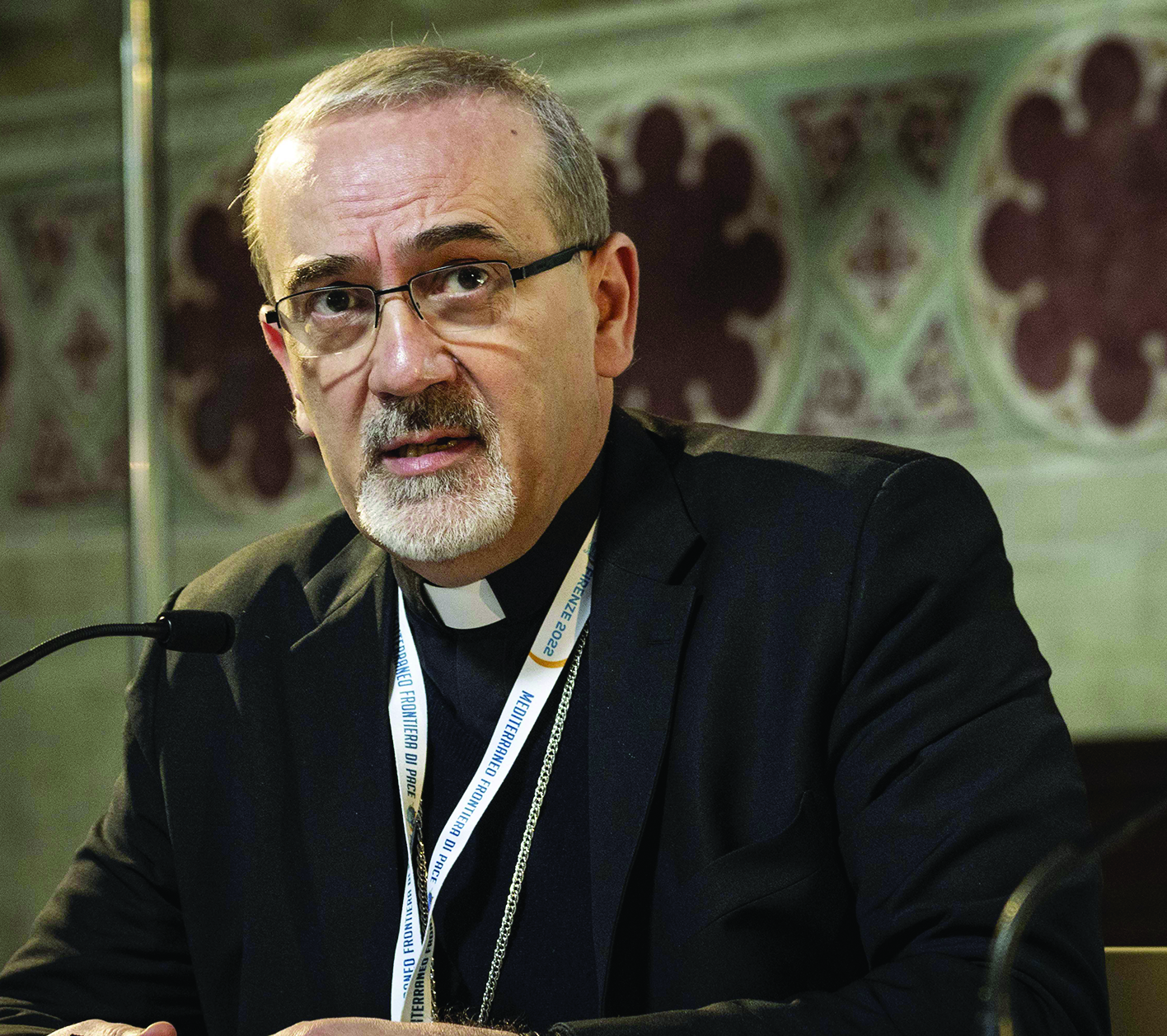
Canadian Cardinal Michael Czerny
The Pope urges us to change our mentality. “In a world where the poor are increasingly numerous, we paradoxically see the growth of a wealthy elite, living in a bubble of comfort and luxury, almost in another world compared to ordinary people” and we “must not let our guard down when it comes to poverty.” During the press conference both Cardinal Czerny and Cardinal Konrad Krajewski, the other cardinal presenter, warned against any attempts to label the Pope’s words as “liberal” or “communist.”

Cardinal Konrad Krajewski
Leo XIV reminds us that the history of the first saints in Rome and the nascent Church shows that they “did not separate belief from social action: faith without witness through concrete actions was considered dead.”
“When the Church kneels beside a leper, a malnourished child or an anonymous dying person, she fulfills her deepest vocation: to love the Lord where he is most disfigured,” writes Leo XIV. There is a beautiful lengthy passage on the relationship of the poor to the early monasteries: “Their silent work was the leaven of a new civilization, where the poor were not a problem to be solved, but brothers and sisters to be welcomed. The rule of sharing, working together and helping the vulnerable established an economy of solidarity, in contrast to the logic of accumulation.
“In addition to providing material assistance, monasteries played a fundamental role in the cultural and spiritual formation of the humblest. In times of plague, war and famine, they were places where the needy found bread and medicine, but also dignity and a voice. It was there that orphans were educated, apprentices received training and ordinary people were taught agricultural techniques and how to read. Knowledge was shared as a gift and a responsibility. The abbot was both teacher and father, and the monastic school was a place of freedom through truth.”
Pope Leo’s first major document ends with: “Christian love breaks down every barrier, brings close those who were distant, unites strangers, and reconciles enemies. It spans chasms that are humanly impossible to bridge, and it penetrates to the most hidden crevices of society. By its very nature, Christian love is prophetic: it works miracles and knows no limits.”