“I believe in one, holy, catholic and apostolic Church”
By Robert Wiesner

”The Divine Trinity” in this 1905 Neo-Gothic back of the Klaren Altar in Cologne’s Dom by artist Wilhelm Mengelberg
These four marks of the Messiah’s Church have been a part of Christian belief from early times without any notable dissent; their inclusion in the Creed was therefore something of a foregone conclusion. Still, their exact definitions have been subject to various interpretations, especially in the age of Protestant denominational chaos.
There is a tendency among some Roman Catholics to see the unity of the Church subsisting in strict union with the Roman papacy; at the other end of the spectrum, some liberal theologians extend Christian unity to include virtually everyone who at some time may have had a charitable thought or two!
As a rule, virtue lies somewhere in the middle: the one principle which denotes membership in the Church is the indivisible Person of Jesus Christ. To the extent that a person or a group professes or practices adherence to Jesus and His teachings, to that extent they belong to the one Church.
This could include those who never even heard of Christianity but who follow the common moral law “written in the hearts of men.” The Church bodies which enjoy the fullness of Christian teaching are the closest branches to the Vine Himself. A great many Christian sects have done away with most of the sacramental system or various other aspects of full belief in the teachings of Jesus. These “branches” exist at some further distance from the Vine roots and thus enjoy only a partial unity; some of their roots lie only in principles of purely human invention. The exact parameters of this partial unity cannot be precisely known and thus must be left to the mercy and wisdom of God for proper sorting.
The holy character of the Church is more obvious. However wayward and fractious individual Christians may be, the Church is yet the extended mystical Body of Christ on earth. As such, it partakes not only of fallible humanity but also of the total infallibility and sacred character of divinity. Divine life and light permeate the Church and impart the very holiness of God despite the sinfulness of some of its members.
The universal reach of the Church is explained by the loving divine intention that all might achieve their salvation. Some modern theologians have come to the doubtful conclusion that even the demons might be forgiven and welcomed back into the sheepfold, but the nature of free will would seem to contradict that possibility; we do, after all, have the example of Judas. Surely if he were eventually to enjoy eternal life it would be a great thing for him to have been born! Alas, we have it on good authority that his fate was not so happy. But the Truth Himself has taught the total applicability of Christianity to the entire human race, whether or not individuals choose to embrace it.
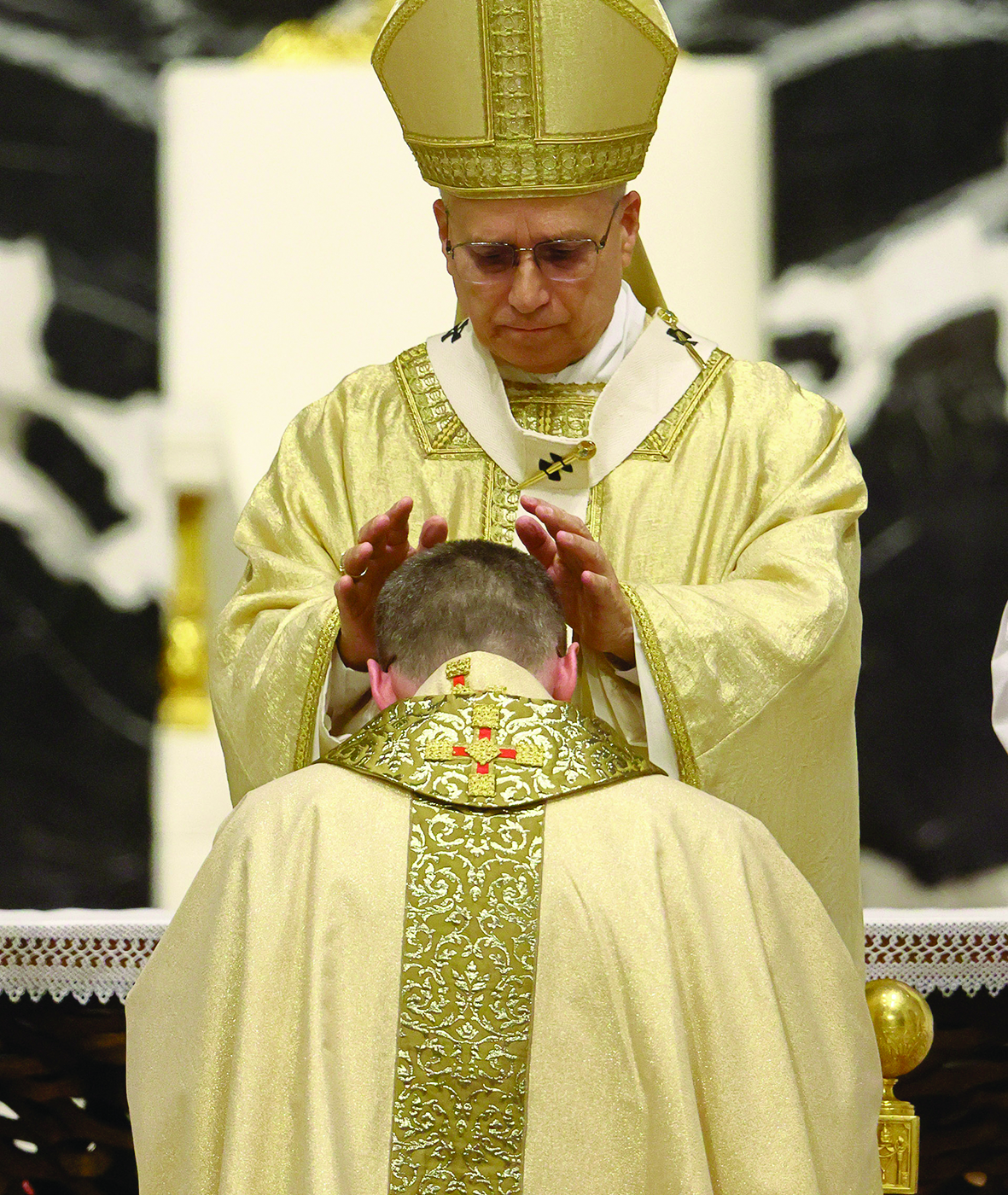
Authority in teaching, loosing and binding, the structural details of the Church and the guidance of God’s family on earth were clearly given to the twelve closest followers of Jesus. The early history of the Church finds this authority passed along to a new generation of leaders in the consecration of bishops.
The unbroken line of bishops continues to this day in the fully sacramental Churches, acknowledged to be the Catholic communion and the various Orthodox bodies throughout the world.
Though the tragedy of schism has inflicted a grievous wound upon full unity, the authority of the Apostles yet lives in the sacramental life lived in these Churches. Protestants, alas, no longer maintain episcopal continuity, which goes some distance in explaining their theological incoherence.