The reflections of a Polish journalist who has been in Rome for 15 years, on the occasion of the second anniversary of the death of Pope Benedict XVI (d. December 31, 2022)
By Anna Artymiak

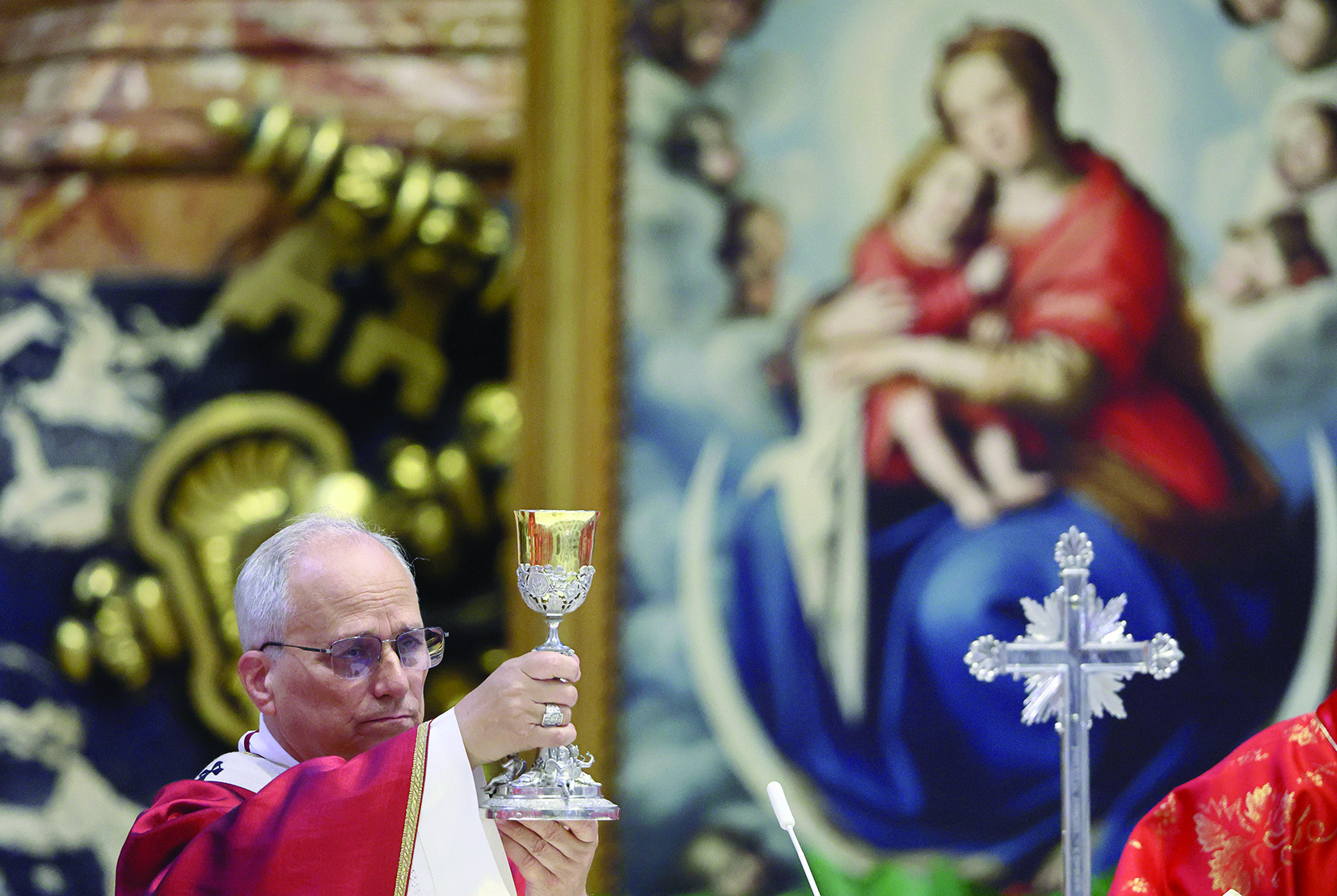
Archbishop Georg Gaenswein celebrates Holy Mass at the tomb of Pope Benedict XVI in the Vatican Grottoes on January 31, 2023, one month after Benedict’s death. (Photo – Grzegorz Galazka)
It has already been two years since Pope Benedict XVI passed away. I remember that morning very vividly. It was the last Saturday of the month, soon after Christmas 2022 and after the feast of St. Stephen. It was such a beautiful, warm, sunny day, and there were long lines to St. Peter’s Basilica. At a time when many tourists were happy to celebrate New Year’s Eve in the Eternal City, time in the Vatican stopped.
We journalists were already aware that our beloved Pope Emeritus might return to the Father’s House soon. Pope Francis at the general audience had asked all to pray for Benedict XVI, saying: “I would like to ask you all for a special prayer for Pope Emeritus Benedict, who is supporting the Church in silence. Remember him – he is very ill -– asking the Lord to console him and to sustain him in this witness of love for the Church, until the end.”
It was then my twin sister, Kasia, and I knew that his condition must have been serious, and agreed that only Benedict’s successor could be the right person to have announced it.
That morning Kasia and I had just returned to Rome from the holiday break at home in Poland, praying all the while to arrive there before Benedict’s actual passing.
Then the announcement came – and the moment of our first tears. He was the first Pope whom we had covered as Vatican correspondents based in Rome. Everyone knew that one day his death would come, but you are never ready for it.
There was one special moment in that sad time: In the evening, a decision was made that any persons who came to the Petriano Gate asking the Swiss Guards if they might come to say goodbye to the Pope Emeritus at his private chapel would be allowed to do so.
When we arrived there that afternoon, Benedict’s legendary personal secretary, Archbishop Georg Gänswein, was outside the private chapel. There were also four Memores Domini, lay consecrated women who ran Benedict’s household, and Br. Eugeniusz, the Polish Bonifrate brother who was the Pope Emeritus’ private nurse. He was the one who heard his last words, pronounced in Italian: “Lord, I love you.”
Don Giorgio, as people in the Vatican used to call Archbishop Gänswein, was very changed. On one side he was visibly moved, on the other it seemed that he had already touched Heaven.
Crowds of ordinary people came. I remember a moving moment when a father brought his intellectually-disabled teenage son. They knelt together as the father tried to explain why they were there.
When they were leaving the chapel, Archbishop Gänswein warmly greeted the boy, inviting him to come back one day for a general audience. “You may personally greet the Pope at the end,” he said in a gentle way.
Pope Benedict’s body was dressed and laid in front of the altar. The body of the “humble worker in the Lord’s vineyard” had been consumed by his suffering, evidenced in how painfully thin he had become.
There was a constant flood of the faithful. The night was very quiet and very warm, very unusual, even for Rome, in December. It was a mystical experience, in which you could feel the peace and love in that place of Benedict’s repose.
During the following days of personal tribute to the late Pope, many people expressed to Archbishop Gänswein their conviction that Benedict XVI was a saint. He replied: “So do I believe.” As during St. John Paul II’s funeral, so also at Benedict’s funeral there were banners proclaiming: “Santo subito!” (“Sainthood now!”).
Since the very month of his death, there has been a tradition to have a monthly Holy Mass said for Benedict XVI at his tomb in the Vatican Grottos. It is usually the last Saturday of the month at 7:15 am. Everybody is welcome.